He has given the camera his back, and it turns out that is the most intimate thing he could have done. Weber frames the head and shoulders from behind: wet hair combed back and lifting into a small dark crest, the pale nape, a single mole on the shoulder blade, the shoulders spreading into something you want to call a landscape and probably shouldn't. To his left the St. Regis River holds a band of grey light and then gives up and goes black. It is 1989, deep in the Adirondack Park, and the whole picture is angled away from us.
There is a long tradition of the figure who will not face front — the Rückenfigur, the walker at the edge of the Romantic canvas — and Weber, who spent summer after summer photographing at these camps, keeps drifting back to the pose. The boy looks at the water; the water looks into the dark; we are left on the bank, watching someone not watch us. What the photograph is really about, I think, is that arrangement of glances, and the particular chill of clean northern water in a season that is over almost before it starts.
Rivers are a problem for photographs, since a river is the one thing that refuses to hold still, and the current at the top left is already downstream by the time you reach the end of this sentence. Weber has stopped it anyway. The hair will not dry, the light will not slide off the water, Rob will not turn his head. You keep waiting for him to, which is precisely the state the picture means to leave you in.
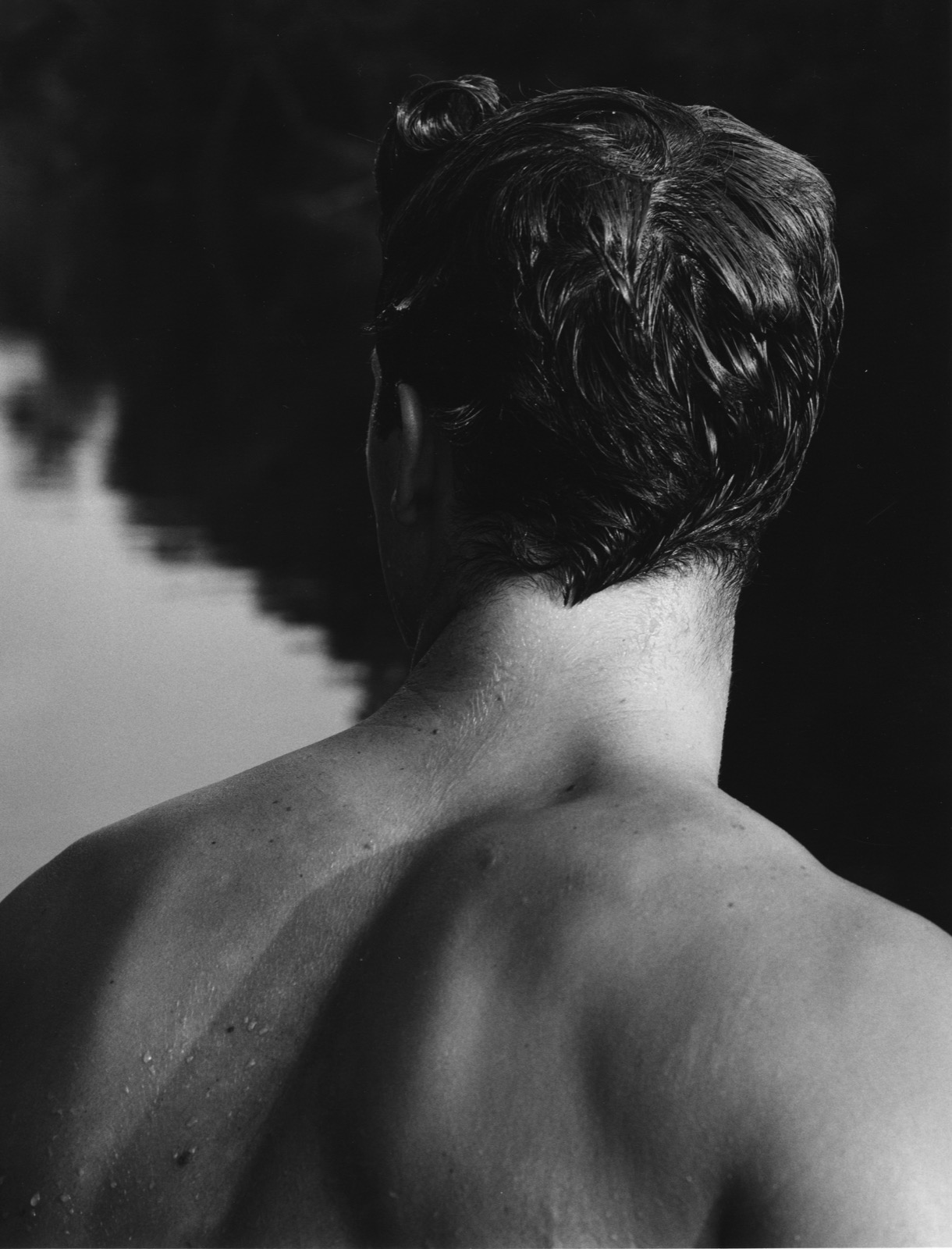

He has given the camera his back, and it turns out that is the most intimate thing he could have done. Weber frames the head and shoulders from behind: wet hair combed back and lifting into a small dark crest, the pale nape, a single mole on the shoulder blade, the shoulders spreading into something you want to call a landscape and probably shouldn't. To his left the St. Regis River holds a band of grey light and then gives up and goes black. It is 1989, deep in the Adirondack Park, and the whole picture is angled away from us.
There is a long tradition of the figure who will not face front — the Rückenfigur, the walker at the edge of the Romantic canvas — and Weber, who spent summer after summer photographing at these camps, keeps drifting back to the pose. The boy looks at the water; the water looks into the dark; we are left on the bank, watching someone not watch us. What the photograph is really about, I think, is that arrangement of glances, and the particular chill of clean northern water in a season that is over almost before it starts.
Rivers are a problem for photographs, since a river is the one thing that refuses to hold still, and the current at the top left is already downstream by the time you reach the end of this sentence. Weber has stopped it anyway. The hair will not dry, the light will not slide off the water, Rob will not turn his head. You keep waiting for him to, which is precisely the state the picture means to leave you in.