Ramón Masats
Spanish, 1931–2024Sant Antoni Market, Barcelona, 1955
Gelatin Silver Print. Printed later.
Image: 37.5 x 24.5 cm / 14 3/4 x 9 5/8 in / Paper: 40 x 30 cm / 15 3/4 x 11 3/4 in
Image: 56.5 x 37.5 cm / 22 1/4 x 14 3/4 in / Paper: 60 x 50 cm / 23 5/8 x 19 3/4 in
Ramón Masats Estate dry stamp, signed and authenticated by Sonia Masats with title and edition number in pencil on label affixed to print verso
Edition of 15 — Image: 37.5 x 24.5 cm / 14 3/4 x 9 5/8 in / Paper: 40 x 30 cm / 15 3/4 x 11 3/4 in
Edition of 5 — Image: 56.5 x 37.5 cm / 22 1/4 x 14 3/4 in / Paper: 60 x 50 cm / 23 5/8 x 19 3/4 in
© The Artist
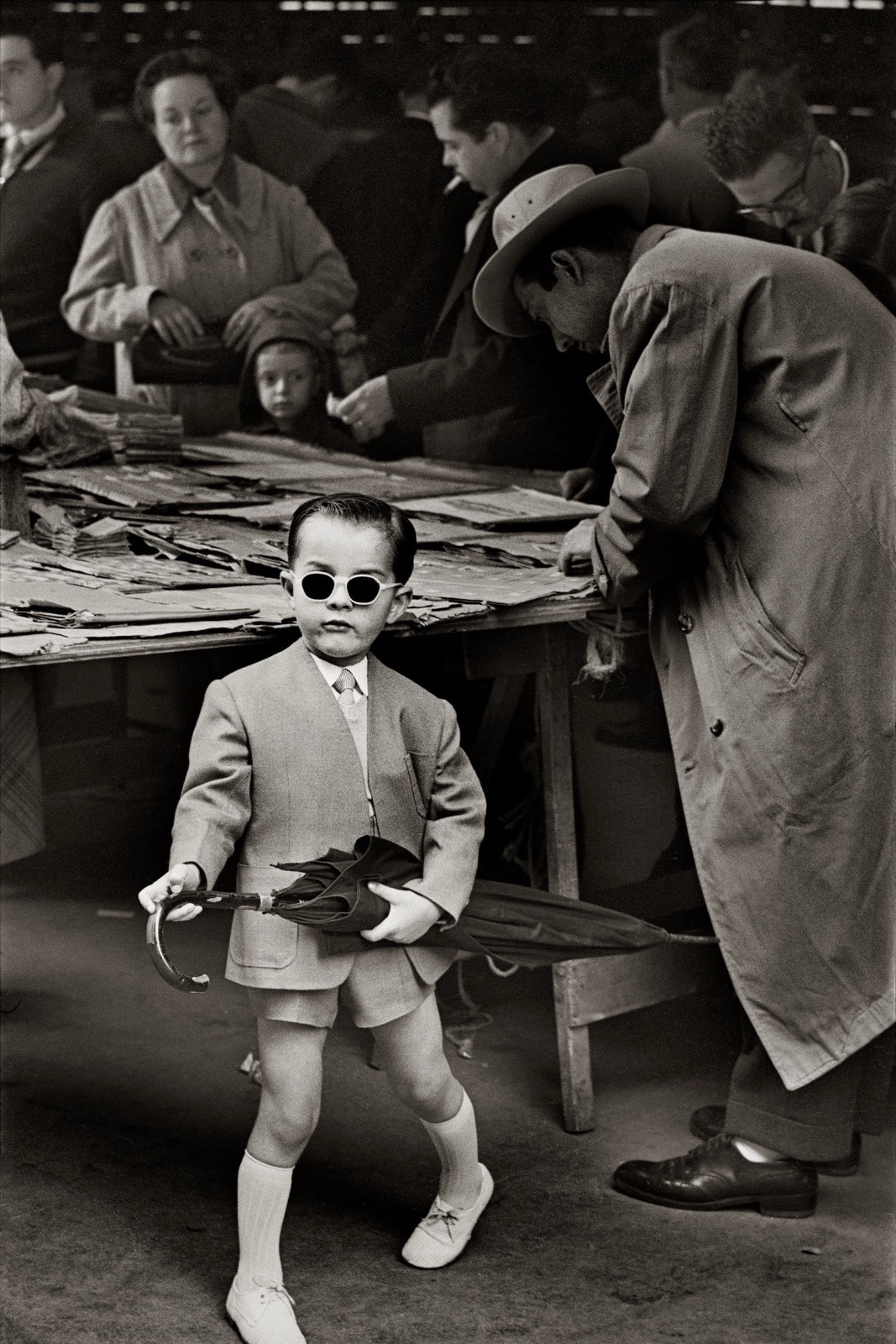
The boy in the white sunglasses got there before you did. That's the first thing — you arrive at this picture and someone has already beaten you to the cool, a kid of maybe four, dead center, in a tailored suit and short trousers, gripping a furled umbrella in gloved hands like a tiny boulevardier who took a wrong turn at the cocktail hour and ended up at a flea market in 1955. Everyone behind him is busy: the trestle table heaped with newspaper and second-hand paper, the adults of Sant Antoni stooping into their weekday haggling, a man in a trench coat folded almost double on the right, oblivious. The boy is not busy. The boy is being photographed, and he knows it, and behind those round white lenses he is giving Masats absolutely nothing.
What gets me is how unfair the composition is to everyone but him. The diagonal of the table funnels you straight to that deadpan little face; the overcast light flattens the whole market into soft silver so there's nothing to look at except the joke. His pale socks and shoes pin him to the dark floor like punctuation. You could call it luck, except luck doesn't hold its nerve this long — Masats just stood there and let the comedy assemble itself, which is the hardest thing in the world to do.
Ramón Masats (1931–2024) belonged to the AFAL generation that pulled Spanish photography out from under Franco's grey, and made the book Neutral Corner along the way — Cartier-Bresson's lesson absorbed and then mislaid on purpose, in favor of something drier and funnier. He won the Premio Nacional de Fotografía; the work sits in the major Spanish collections. This gelatin silver print, made later from the 1955 negative, keeps one of his most perfect accidents exactly where it happened.