Which of these pale figures is alive? The picture is organized so that the question takes longer to answer than it should. Ivory bodies stand in an ivory room under one continuous veil of clear plastic; the eyes are ringed with the same dark paint, the skin polished toward the same sheen. The evidence, when it comes, is small: a single gaze with focus in it, hands hanging with the slight unevenness only flesh manages, a cream dress with a real pocket flap, which no mannequin has ever needed.
The organization is severe and quietly witty. Light arrives from everywhere and nowhere, shadowless, so that modeling is abolished and the whole scene compresses into a few close intervals of white. What drawing there is belongs to the plastic: its creases make the only dark lines, its glints the only highlights, and it falls from the figures’ heads like bridal veiling ordered in bulk. The photographer has set the living girl at dead center, frontal, feet lost in the sheeting, and let the dummies lean and slouch around her in poses more relaxed than her own. The deadpan joke is that she is the stillest thing in the room.
Photographers have kept company with mannequins since Atget’s shop windows, and the game is always the same: the dummy teaches us how strange the living body is. This Barcelona photographer, whose fashion work runs through the major European titles, plays it here at the highest key. The archival pigment print earns its keep in this territory, holding a dozen whites apart, bone, milk, parchment, glare, without letting one of them fail.
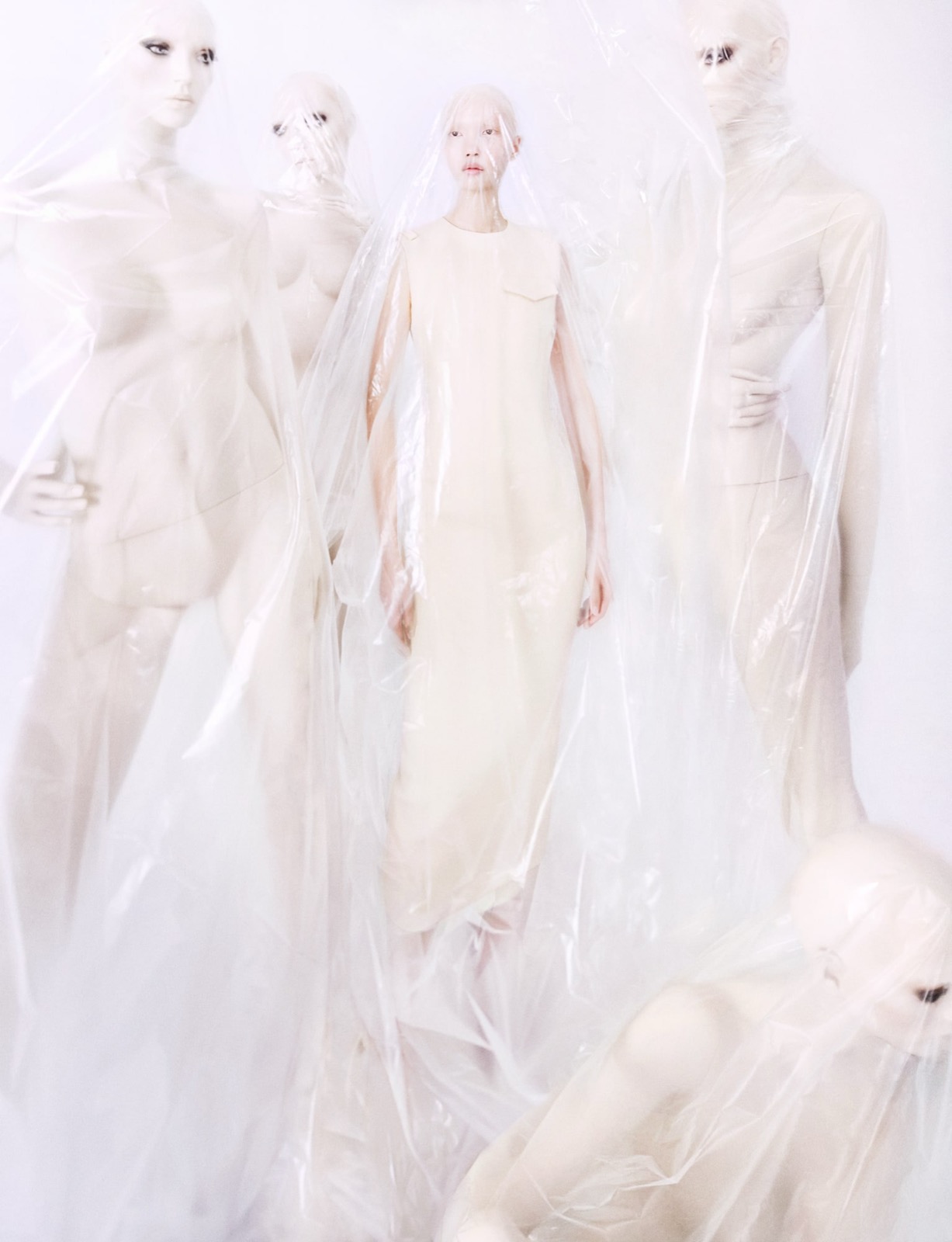

Which of these pale figures is alive? The picture is organized so that the question takes longer to answer than it should. Ivory bodies stand in an ivory room under one continuous veil of clear plastic; the eyes are ringed with the same dark paint, the skin polished toward the same sheen. The evidence, when it comes, is small: a single gaze with focus in it, hands hanging with the slight unevenness only flesh manages, a cream dress with a real pocket flap, which no mannequin has ever needed.
The organization is severe and quietly witty. Light arrives from everywhere and nowhere, shadowless, so that modeling is abolished and the whole scene compresses into a few close intervals of white. What drawing there is belongs to the plastic: its creases make the only dark lines, its glints the only highlights, and it falls from the figures’ heads like bridal veiling ordered in bulk. The photographer has set the living girl at dead center, frontal, feet lost in the sheeting, and let the dummies lean and slouch around her in poses more relaxed than her own. The deadpan joke is that she is the stillest thing in the room.
Photographers have kept company with mannequins since Atget’s shop windows, and the game is always the same: the dummy teaches us how strange the living body is. This Barcelona photographer, whose fashion work runs through the major European titles, plays it here at the highest key. The archival pigment print earns its keep in this territory, holding a dozen whites apart, bone, milk, parchment, glare, without letting one of them fail.