Before any subject, there is the light: a bleached sun burning through winter haze in the upper left, so diffuse that it seems less a source than the rumour of one. Beneath it a snow-scraped road climbs toward a horizon that fog has erased, and a line of utility poles marches off to the right, their wires drawn taut across a sky the colour of breath. Todd Hido made the photograph from a moving car, and the faint smears on the surface—the ghosts of the windshield—remain, honest about how the world was seen.
I keep returning to the field on the left, its dry stubble showing gold through the thin snow, the one warm note in a scene otherwise given over to grey. This is A Road Divided, and the division is not only in the road but in the picture's temperament, which holds cold and tenderness in the same frame. The archival pigment print carries the softness intact, the way distance dissolves into nothing at the crest of the hill.
There is a particular loneliness to a road that leads into fog, but also a promise, since we cannot see what it withholds. Hido has always been drawn to the American in-between, the places one passes through rather than arrives at. What he offers is not a destination but the texture of transit itself—the hum of tyres, the long light, the poles counting off the miles—and the strange consolation of moving through a landscape that asks nothing of you but attention.
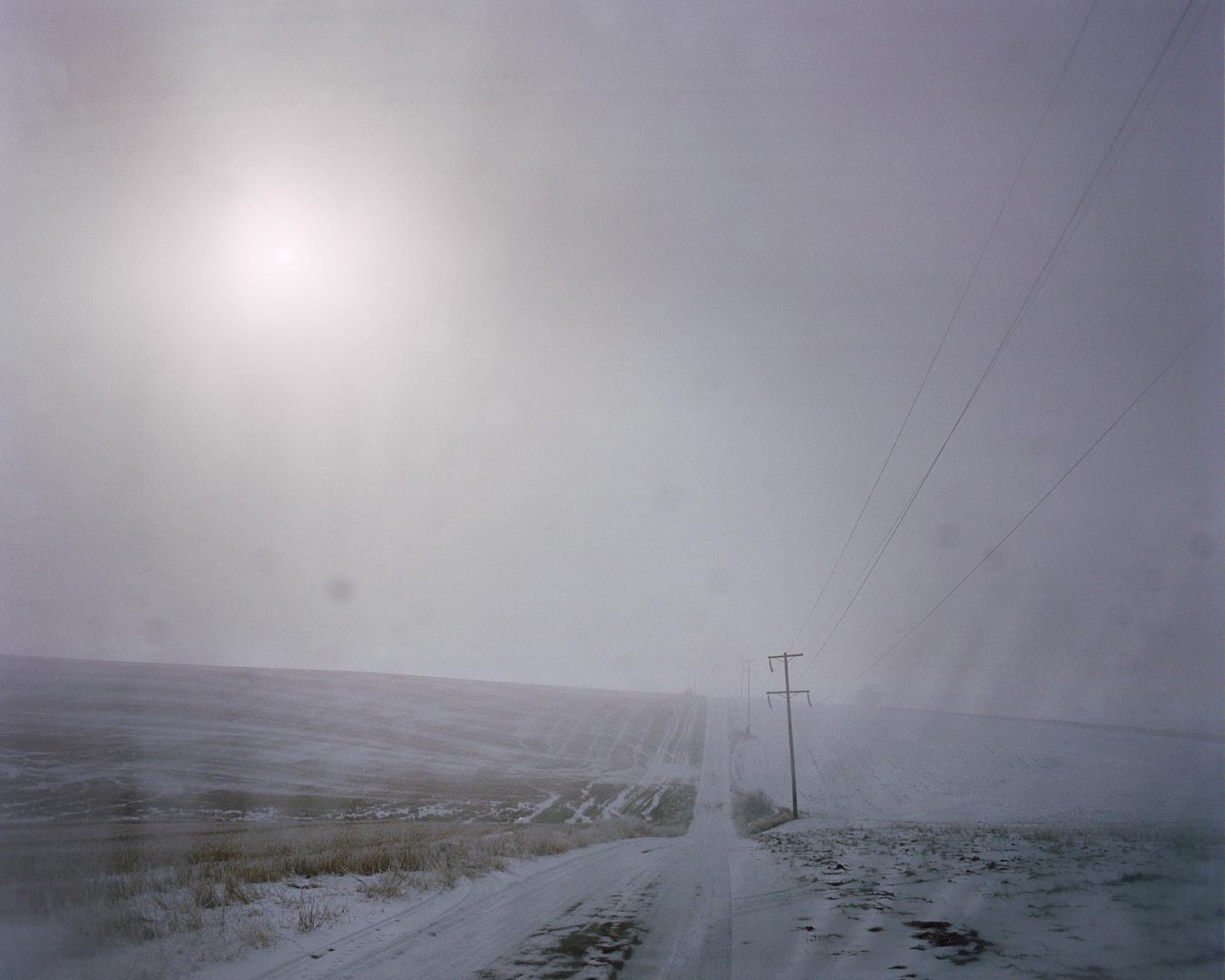

Before any subject, there is the light: a bleached sun burning through winter haze in the upper left, so diffuse that it seems less a source than the rumour of one. Beneath it a snow-scraped road climbs toward a horizon that fog has erased, and a line of utility poles marches off to the right, their wires drawn taut across a sky the colour of breath. Todd Hido made the photograph from a moving car, and the faint smears on the surface—the ghosts of the windshield—remain, honest about how the world was seen.
I keep returning to the field on the left, its dry stubble showing gold through the thin snow, the one warm note in a scene otherwise given over to grey. This is A Road Divided, and the division is not only in the road but in the picture's temperament, which holds cold and tenderness in the same frame. The archival pigment print carries the softness intact, the way distance dissolves into nothing at the crest of the hill.
There is a particular loneliness to a road that leads into fog, but also a promise, since we cannot see what it withholds. Hido has always been drawn to the American in-between, the places one passes through rather than arrives at. What he offers is not a destination but the texture of transit itself—the hum of tyres, the long light, the poles counting off the miles—and the strange consolation of moving through a landscape that asks nothing of you but attention.