A photograph can be a deliberate act of composition long before it is a record of a place, and this row of Minnesota pines reads first as an arrangement. Jessica Lange frames a thin screen of trunks across the whole width of the picture, tall and mostly bare, a few still holding dark needled crowns, the rest stripped to vertical lines that rhyme and refuse to rhyme. Behind them a pale, undifferentiated sky and the flat grey of a lake hold the scene open. She chooses a vantage low enough that the trees climb past the upper edge, keeping the eye among the verticals rather than releasing it into the distance.
What gives the image its contemporary charge is how knowingly it sets the natural motif against a near-graphic flatness. The lake offers no incident, the sky no weather to speak of, and the silhouetted pines become almost a drawn structure laid over an empty field. There is a long lineage here, from pictorialist woodland studies to cooler recent landscape practice, and Lange seems aware of standing inside it. The grain of the gelatin silver print thickens the trunks until they feel cut from the paper, while the gradations of the sky stay tender and exposed.
For a body of work made along Highway 61, this is the quiet interval rather than the incident, the place glimpsed from the roadside and held. The bare branches and the wintered shore date the moment without narrating it. Lange resists the picturesque and lets the trees do the work of marking time, each trunk a measure laid against the others. The picture asks to be read slowly, the way one reads the spaces between things, rewarding that patience with a stillness that never quite resolves into calm.
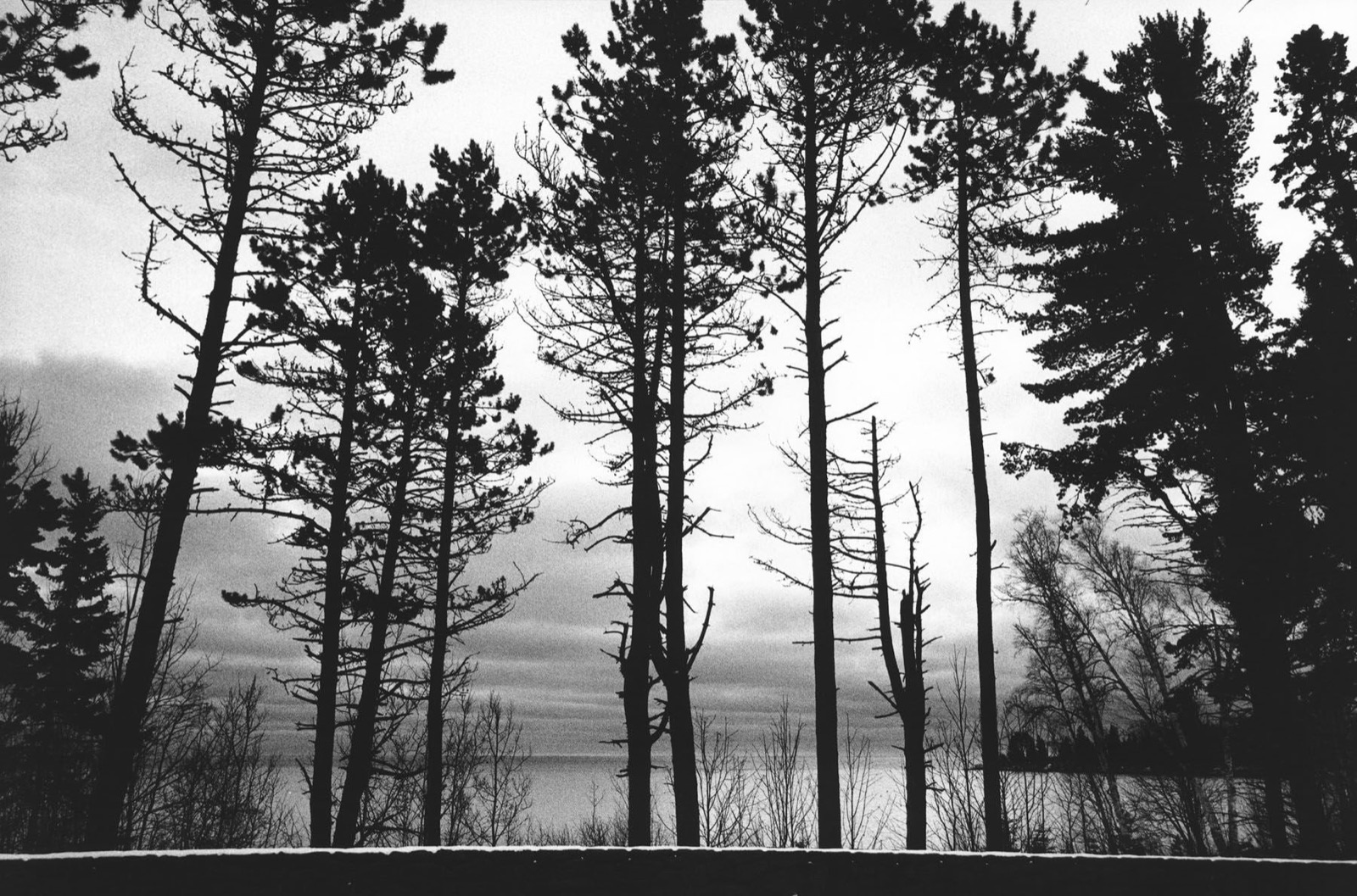

A photograph can be a deliberate act of composition long before it is a record of a place, and this row of Minnesota pines reads first as an arrangement. Jessica Lange frames a thin screen of trunks across the whole width of the picture, tall and mostly bare, a few still holding dark needled crowns, the rest stripped to vertical lines that rhyme and refuse to rhyme. Behind them a pale, undifferentiated sky and the flat grey of a lake hold the scene open. She chooses a vantage low enough that the trees climb past the upper edge, keeping the eye among the verticals rather than releasing it into the distance.
What gives the image its contemporary charge is how knowingly it sets the natural motif against a near-graphic flatness. The lake offers no incident, the sky no weather to speak of, and the silhouetted pines become almost a drawn structure laid over an empty field. There is a long lineage here, from pictorialist woodland studies to cooler recent landscape practice, and Lange seems aware of standing inside it. The grain of the gelatin silver print thickens the trunks until they feel cut from the paper, while the gradations of the sky stay tender and exposed.
For a body of work made along Highway 61, this is the quiet interval rather than the incident, the place glimpsed from the roadside and held. The bare branches and the wintered shore date the moment without narrating it. Lange resists the picturesque and lets the trees do the work of marking time, each trunk a measure laid against the others. The picture asks to be read slowly, the way one reads the spaces between things, rewarding that patience with a stillness that never quite resolves into calm.