Peter Lindbergh
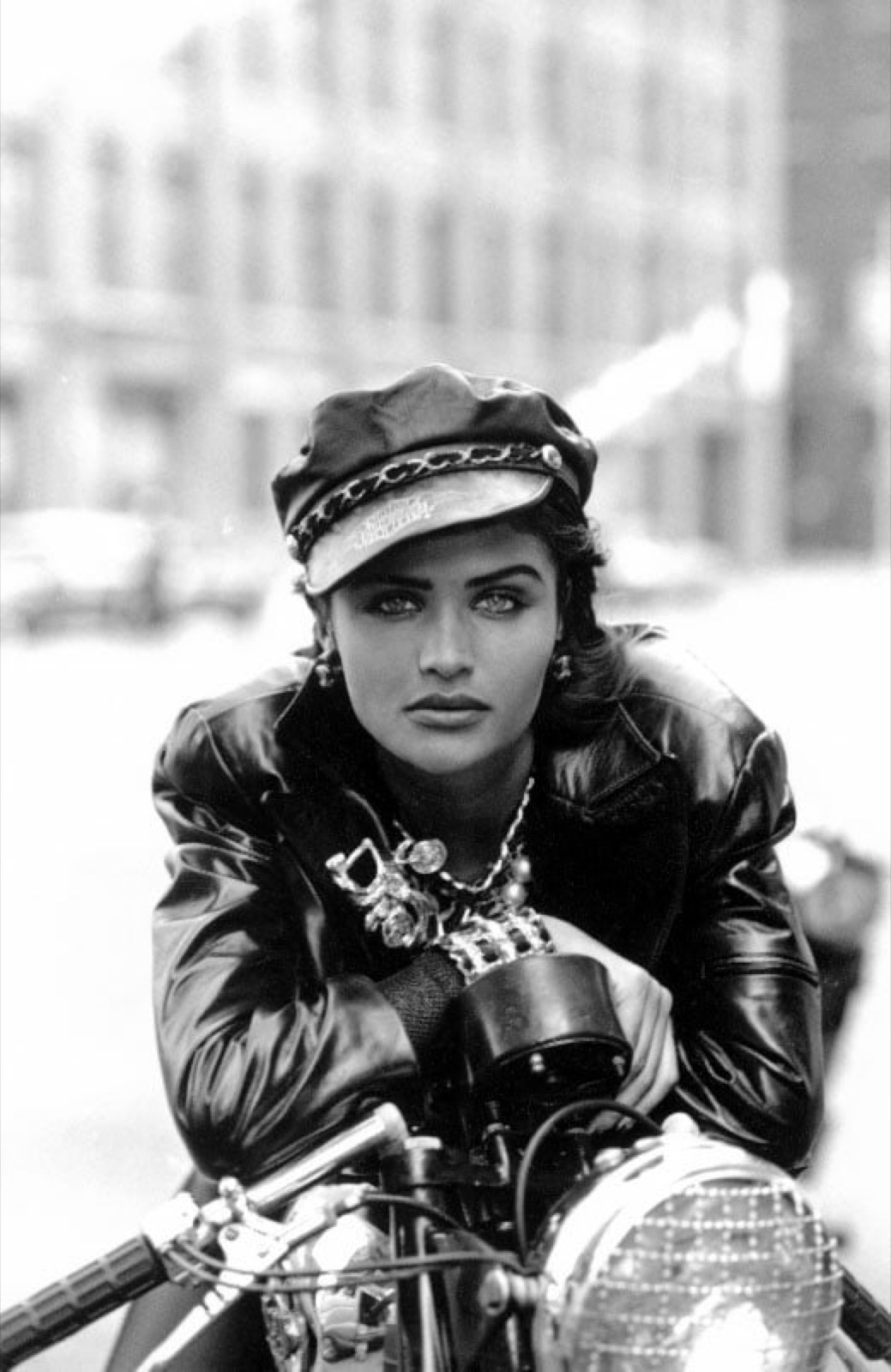
German, 1944–2019Helena Christensen, Brooklyn, Vogue USA, 1991
Gelatin Silver Print.
Available sizes within an umbrella edition of 25 :
Image: 51.5 x 34 cm / 20 1/4 x 13 3/8 in / Paper: 60 x 50 cm / 23 5/8 x 19 3/4 in
Image: 90 x 53 cm / 35 3/8 x 20 7/8 in / Paper: 90 x 60 cm / 35 3/8 x 23 5/8 in
Hand-signed by artist, titled, numbered and dated on certificate label affixed to mount verso
Edition 1-15/25 — Image: 51.5 x 34 cm / 20 1/4 x 13 3/8 in / Paper: 60 x 50 cm / 23 5/8 x 19 3/4 in
Edition 16-25/25 — Image: 90 x 53 cm / 35 3/8 x 20 7/8 in / Paper: 90 x 60 cm / 35 3/8 x 23 5/8 in
© The Artist
Peter Lindbergh did not merely photograph the supermodels; he conjured them into being. His 1989 black-and-white group portrait for British Vogue is widely credited with announcing the supermodel era, and across three decades he held to a single, near-moral conviction: that the truth of a face matters more than its correction. Working almost always in monochrome, drawing on German cinema and the documentary tradition, he stripped away artifice in favour of character, weather and emotion.
This 1991 portrait of Helena Christensen, made on a Brooklyn street for American Vogue, is that philosophy in a single frame. Leaning low over the handlebars of a motorcycle, in a leather jacket and a chain-trimmed cap, she meets the lens with absolute composure — sensual, unsmiling, entirely her own. The brownstones dissolve into grey behind her; the light is plain daylight; nothing is glamorised, and so everything becomes glamorous.
Lindbergh's women are never decorative. They are protagonists — strong, intelligent, unmistakably present — and his refusal of gloss now reads as prophetic in an age exhausted by retouching. Here the iconography of rebellion (the machine, the leather, the cool, level stare) is lent a classical dignity, the model elevated to the status of a character in a film we will never see the rest of. It is a portrait that helped redefine beauty for a generation, and that endures precisely because it sought something rarer than perfection: a person, fully and frankly there, photographed as if she had nothing left to prove. He would soon carry that same naturalism to film, directing George Michael's Freedom! '90 with the very models he had helped to crown.