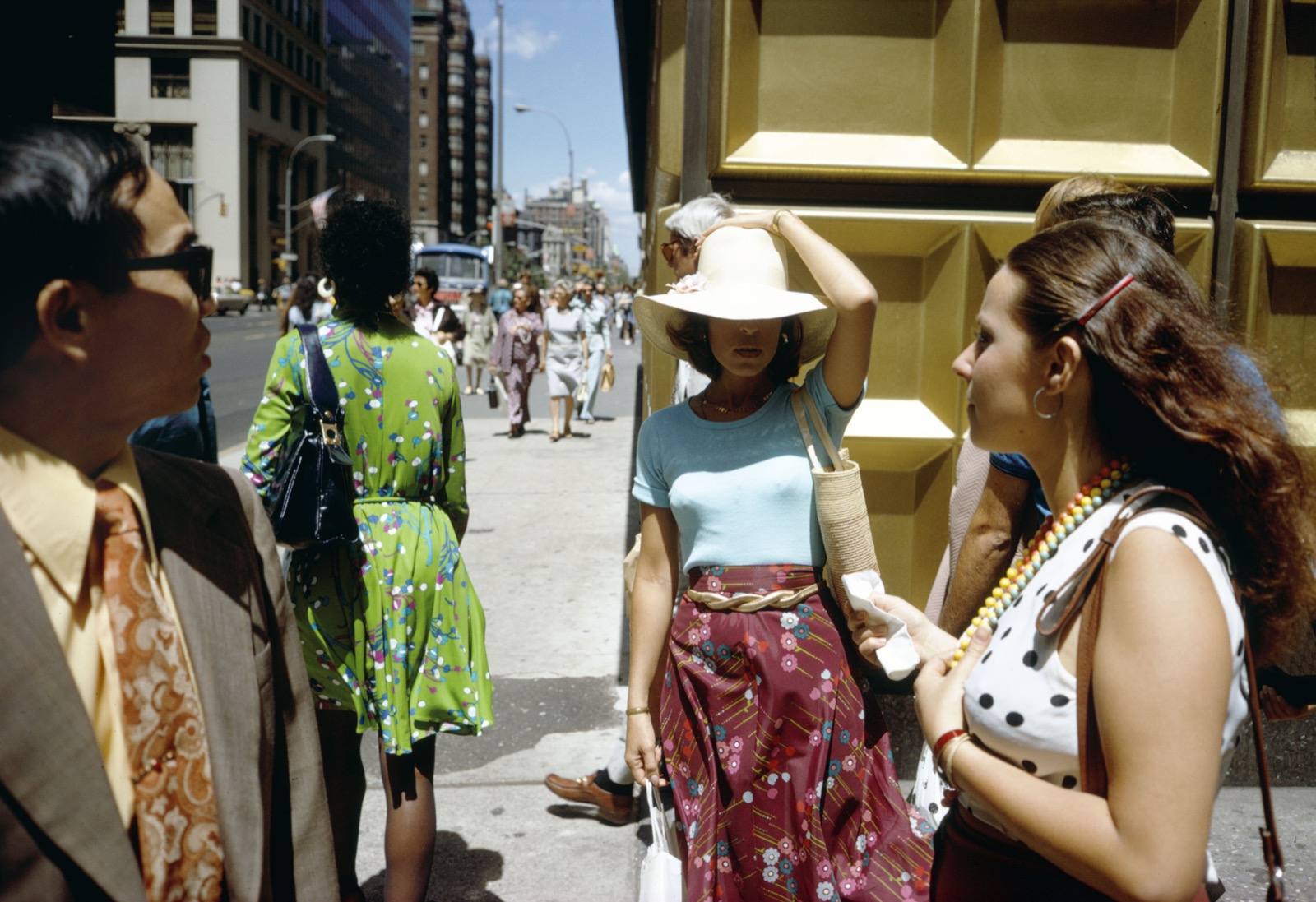
She's the only one not giving us her face, and of course she's the one I keep coming back to. Both arms up, settling a wide cream straw hat onto her head, mid-adjustment — and the brim does the thing brims do, lays a clean band of shade right across her eyes so that she's looking out at the street, possibly at the camera, and we'll never be sure. The blue T-shirt, the wine-and-flower skirt, the rope belt: all of it lit and legible. Just not the look. She withholds the one thing you actually wanted.
What gets me is how much everyone else is doing instead. The man at the left edge in his paisley tie and dark glasses, caught talking; the woman in the lime-green dress receding up Madison with her shoulder bag; the woman on the right in polka dots and a string of fat amber beads, mouth open, mid-sentence. A whole sidewalk of people transacting, 1974, and the picture quietly organizes itself around the person who's opted out — busy with her hat, sealed off inside that gesture.
This is Meyerowitz before the large-format hush of Cape Light, working the early colour street pictures that helped make the case nobody yet believed: that the New York pavement, in colour, deserved the same seriousness as anything in black and white. He sees in fives and sixes, lets the frame stay crowded and unresolved, trusts that the gold-panelled wall and the bright summer reds will hold it. They do. And the held look, the one she keeps, turns out to be the thing you carry home.
She's the only one not giving us her face, and of course she's the one I keep coming back to. Both arms up, settling a wide cream straw hat onto her head, mid-adjustment — and the brim does the thing brims do, lays a clean band of shade right across her eyes so that she's looking out at the street, possibly at the camera, and we'll never be sure. The blue T-shirt, the wine-and-flower skirt, the rope belt: all of it lit and legible. Just not the look. She withholds the one thing you actually wanted.
What gets me is how much everyone else is doing instead. The man at the left edge in his paisley tie and dark glasses, caught talking; the woman in the lime-green dress receding up Madison with her shoulder bag; the woman on the right in polka dots and a string of fat amber beads, mouth open, mid-sentence. A whole sidewalk of people transacting, 1974, and the picture quietly organizes itself around the person who's opted out — busy with her hat, sealed off inside that gesture.
This is Meyerowitz before the large-format hush of Cape Light, working the early colour street pictures that helped make the case nobody yet believed: that the New York pavement, in colour, deserved the same seriousness as anything in black and white. He sees in fives and sixes, lets the frame stay crowded and unresolved, trusts that the gold-panelled wall and the bright summer reds will hold it. They do. And the held look, the one she keeps, turns out to be the thing you carry home.