The grin is about to break into a laugh and the whole absurd tableau will come apart, but for this held instant he keeps it: both fists curled to his ears in a double-biceps flex, bare feet planted wide on the warm hood of a wood-panelled station wagon. He wears only white briefs. The car, some early-eighties American cruiser with chrome wire wheels and faux-timber flanks, gleams dully under an overcast sky while the trees of the Florida yard loom soft and dark behind him.
The title tells us this is a tryout, an audition for the old physique-magazine ideal that the photographer Bruce of Los Angeles peddled to a coded midcentury readership, and half the fun is the mismatch. The body is museum-grade, sculpted and glazed with effort; the stage is a suburban car you might expect to be full of groceries. Weber lets both truths stand. There is real muscle here and real parody, the earnestness of the flex undercut, and somehow ennobled, by the ridiculous plinth he has chosen to strike it on.
Weber has always loved the American body at its most hopeful and most hokey, the high-school athlete, the small-town Adonis, the boy who flexes because someone finally asked him to. That affection, never quite mockery, is what saves the picture. As a gelatin silver print it wears its lineage openly: the same lustrous, slightly hard tonality the old muscle photographers used, the hood’s highlight blown to white, the shadows under the trees gone deep and grainless. It survives as both joke and genuine homage, printed to last.
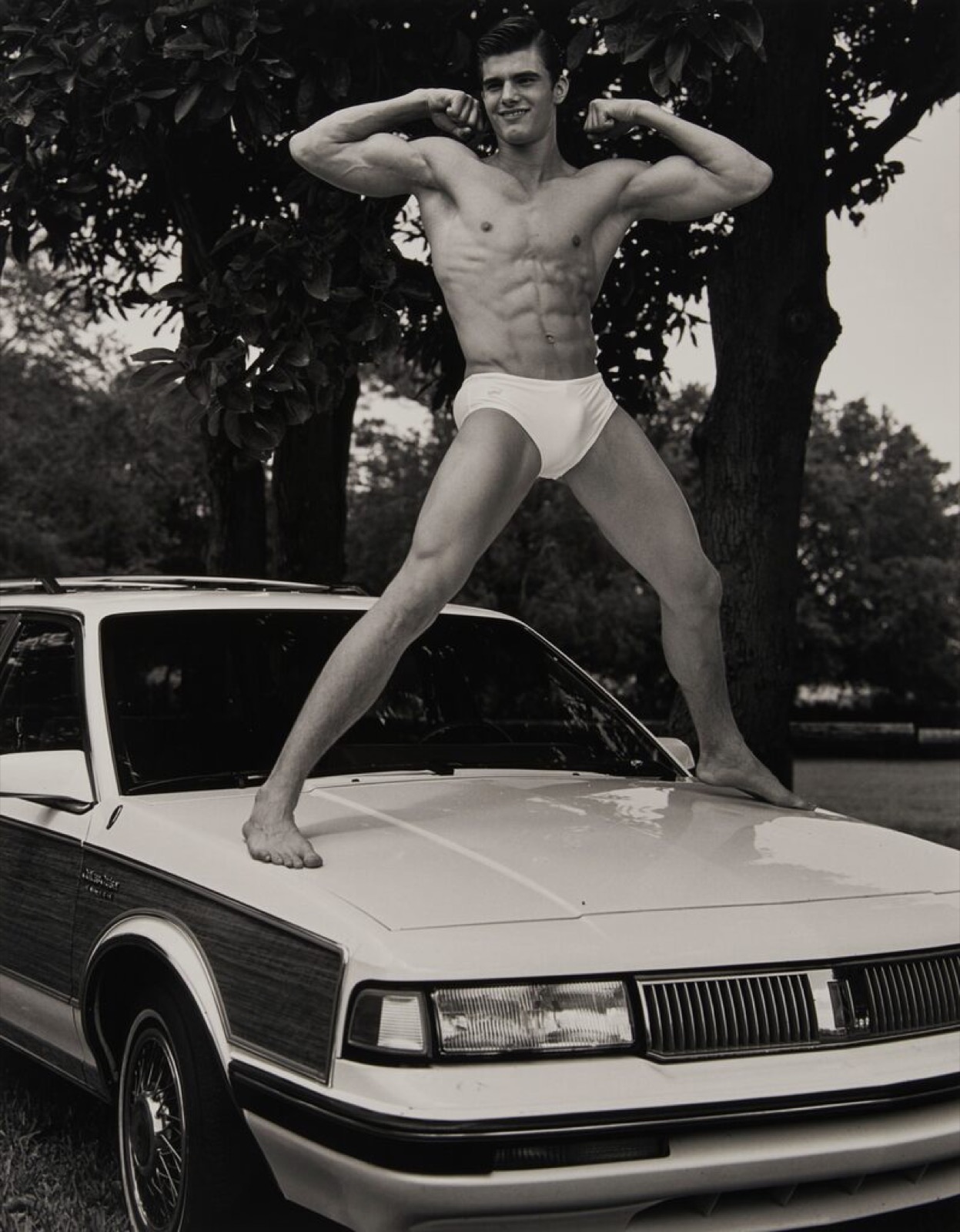
The grin is about to break into a laugh and the whole absurd tableau will come apart, but for this held instant he keeps it: both fists curled to his ears in a double-biceps flex, bare feet planted wide on the warm hood of a wood-panelled station wagon. He wears only white briefs. The car, some early-eighties American cruiser with chrome wire wheels and faux-timber flanks, gleams dully under an overcast sky while the trees of the Florida yard loom soft and dark behind him.
The title tells us this is a tryout, an audition for the old physique-magazine ideal that the photographer Bruce of Los Angeles peddled to a coded midcentury readership, and half the fun is the mismatch. The body is museum-grade, sculpted and glazed with effort; the stage is a suburban car you might expect to be full of groceries. Weber lets both truths stand. There is real muscle here and real parody, the earnestness of the flex undercut, and somehow ennobled, by the ridiculous plinth he has chosen to strike it on.
Weber has always loved the American body at its most hopeful and most hokey, the high-school athlete, the small-town Adonis, the boy who flexes because someone finally asked him to. That affection, never quite mockery, is what saves the picture. As a gelatin silver print it wears its lineage openly: the same lustrous, slightly hard tonality the old muscle photographers used, the hood’s highlight blown to white, the shadows under the trees gone deep and grainless. It survives as both joke and genuine homage, printed to last.