The double portrait is among the oldest arrangements Western picture-making knows, two bodies pressed into a single silhouette, from the painted Visitation to the studio postcard of sisters. One woman stands in a sleeveless black pleated dress; a second presses in from behind, bare arms crossed at her throat like a clasp, a cropped dark head at the shoulder. The Sixties are quoted, the geometric bob, the shift dress, the smoky eye, yet the setting is a stripped loft with plaster wall and raw plank floor, and the quotation turns cold.
What the image sells is intimacy; what it withholds is warmth. Both faces meet the lens head-on, unsmiling, one with a ring at the septum, and their closeness reads less as tenderness than as a designed effect, held only as long as the exposure. I am not immune. The pleating falls in long dark ribs to the knee, the two crops rhyme, the embrace composes a single column against the pale wall. Seduction and suspicion arrive together, which is what the best fashion pictures teach us to feel.
Meisel photographed every Vogue Italia cover across a quarter-century and made the supermodels of his era, giving commerce the gravity of portraiture. Here two of them stand for the camera and for each other, monumental and cold, aware that being looked at is the work. The bare room refuses glamour so the faces can supply it. Issued now as an archival pigment print, the tone runs unbroken from black dress to bright plaster, and the double edge holds: an advertisement for closeness that also studies how closeness is made.
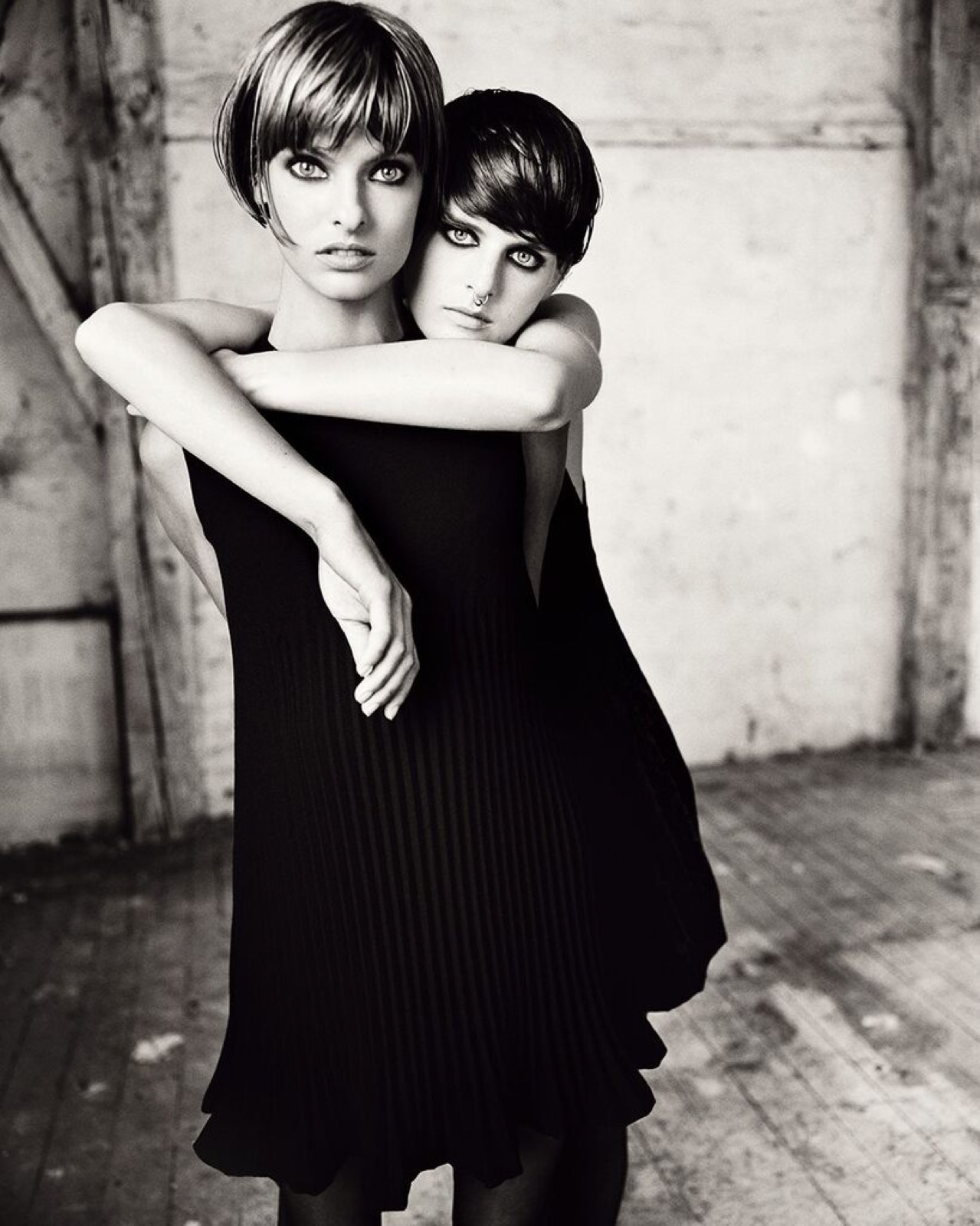

The double portrait is among the oldest arrangements Western picture-making knows, two bodies pressed into a single silhouette, from the painted Visitation to the studio postcard of sisters. One woman stands in a sleeveless black pleated dress; a second presses in from behind, bare arms crossed at her throat like a clasp, a cropped dark head at the shoulder. The Sixties are quoted, the geometric bob, the shift dress, the smoky eye, yet the setting is a stripped loft with plaster wall and raw plank floor, and the quotation turns cold.
What the image sells is intimacy; what it withholds is warmth. Both faces meet the lens head-on, unsmiling, one with a ring at the septum, and their closeness reads less as tenderness than as a designed effect, held only as long as the exposure. I am not immune. The pleating falls in long dark ribs to the knee, the two crops rhyme, the embrace composes a single column against the pale wall. Seduction and suspicion arrive together, which is what the best fashion pictures teach us to feel.
Meisel photographed every Vogue Italia cover across a quarter-century and made the supermodels of his era, giving commerce the gravity of portraiture. Here two of them stand for the camera and for each other, monumental and cold, aware that being looked at is the work. The bare room refuses glamour so the faces can supply it. Issued now as an archival pigment print, the tone runs unbroken from black dress to bright plaster, and the double edge holds: an advertisement for closeness that also studies how closeness is made.