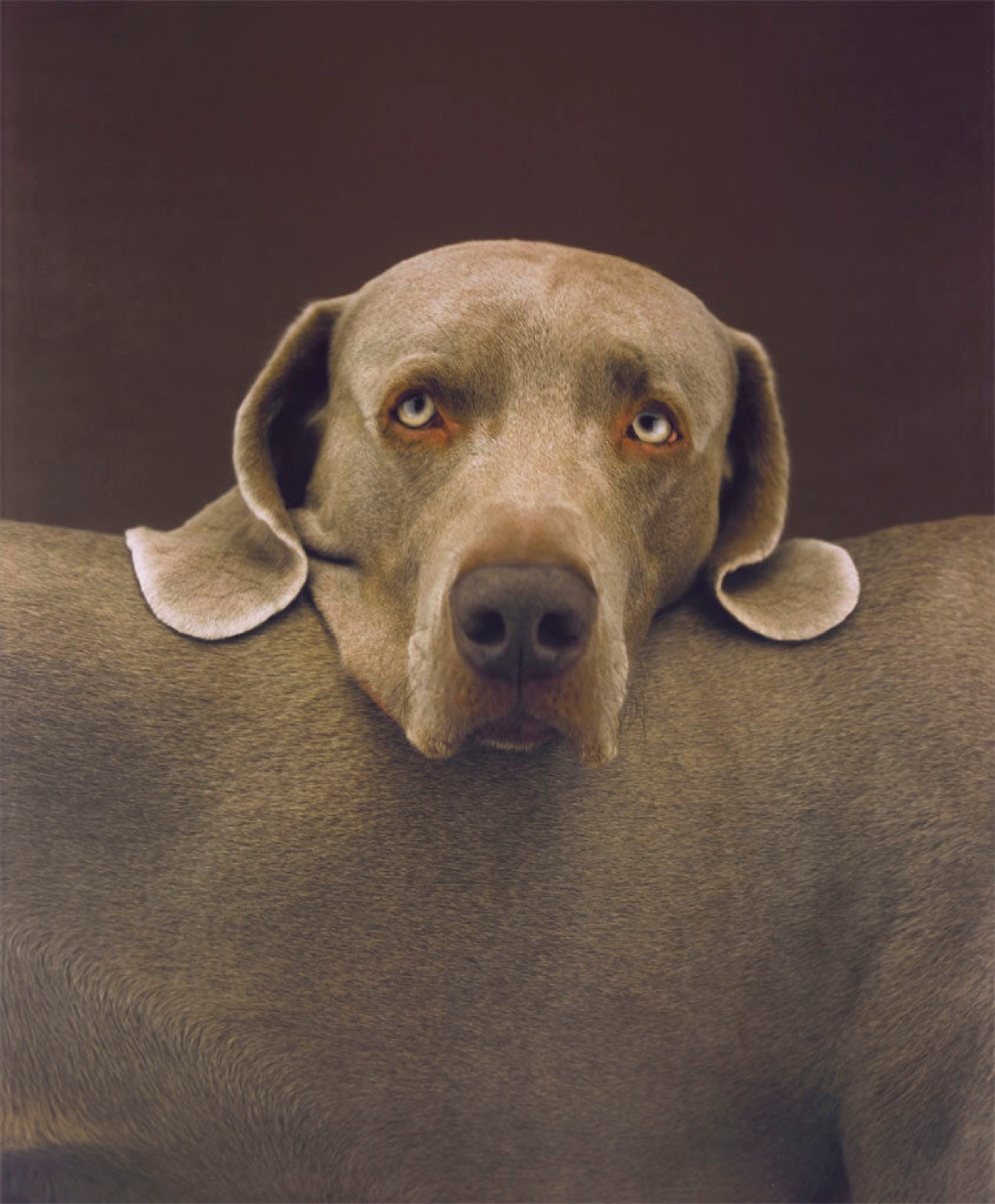
It is the ear that undoes me first: one long velvet flap fallen open across the grey flank, spread flat as a glove someone set down and forgot. I had meant to attend to the whole arrangement, a head laid along the spine of another body, the warm brown air behind, but the eye keeps returning to that single splayed ear, its pale underside catching the light where the fur thins to suede.
Everything else composes itself toward dignity. The chin sinks into the coat of the reclining dog as into a pillow, the amber eyes lift with that expression we insist on calling human because we have no animal word for it. And yet the picture will not hold its solemn pose; the more tenderly the head rests, the more absurd its perch becomes, a portrait balanced on the indifference of a sleeping back. Tenderness and comedy share the same warm skin here, and I cannot separate them.
Wegman has made his Weimaraners the great deadpan subject of American photography since the 1970s, and by this date he had learned to let their bodies carry feeling without a single prop. Here there is no costume, only fur, weight, and the geometry of one animal leaning on another. The image survives as an archival pigment print, its browns and greys held in a matte, continuous surface that keeps every hair of that fallen ear legible. What stays with me is not the joke but the trust: a heavy head, entrusted, and allowed to be still.
It is the ear that undoes me first: one long velvet flap fallen open across the grey flank, spread flat as a glove someone set down and forgot. I had meant to attend to the whole arrangement, a head laid along the spine of another body, the warm brown air behind, but the eye keeps returning to that single splayed ear, its pale underside catching the light where the fur thins to suede.
Everything else composes itself toward dignity. The chin sinks into the coat of the reclining dog as into a pillow, the amber eyes lift with that expression we insist on calling human because we have no animal word for it. And yet the picture will not hold its solemn pose; the more tenderly the head rests, the more absurd its perch becomes, a portrait balanced on the indifference of a sleeping back. Tenderness and comedy share the same warm skin here, and I cannot separate them.
Wegman has made his Weimaraners the great deadpan subject of American photography since the 1970s, and by this date he had learned to let their bodies carry feeling without a single prop. Here there is no costume, only fur, weight, and the geometry of one animal leaning on another. The image survives as an archival pigment print, its browns and greys held in a matte, continuous surface that keeps every hair of that fallen ear legible. What stays with me is not the joke but the trust: a heavy head, entrusted, and allowed to be still.