Silver does most of the talking here — a length of lamé knotted low and falling in liquid pleats, the one molten surface in a picture otherwise built from chain-link diamonds and the long pale smear of the Santa Monica shore. It catches the California light and throws it back wet, the kind of fabric a stylist pulls at the last second and Weber turns into the whole erotic engine of the frame. Against that shimmer everything else goes matte: the dull wire of the fence, the soft gray haze of bay and palm, the cool tone of skin.
Then the boy. He's all of nineteen, maybe, hair slicked dark, one arm hooked over a white pipe railing, jaw set, daring you to look. You look. This is Weber in his eighties pomp, the decade he rewrote the rules of how American men could be photographed — and sold. He had already moved past the magazine page: the Calvin Klein campaigns, the casual nudity, the salt-and-sun mythology that put him everywhere. What keeps the image from sliding into pure beefcake is his classicism — a full, unhurried tonal run from the silver wrap to the dissolving Malibu hills, the body described rather than flaunted. The eroticism reads as poise. The fence presses him toward us; the bay and the palms retreat behind the wire, so he's both pinned and offered.
Weber carried this charge from editorial into the museum — prints at the Whitney, at the International Center of Photography. An early gelatin silver print, edition of fifteen, from the Santa Monica work that made the name.
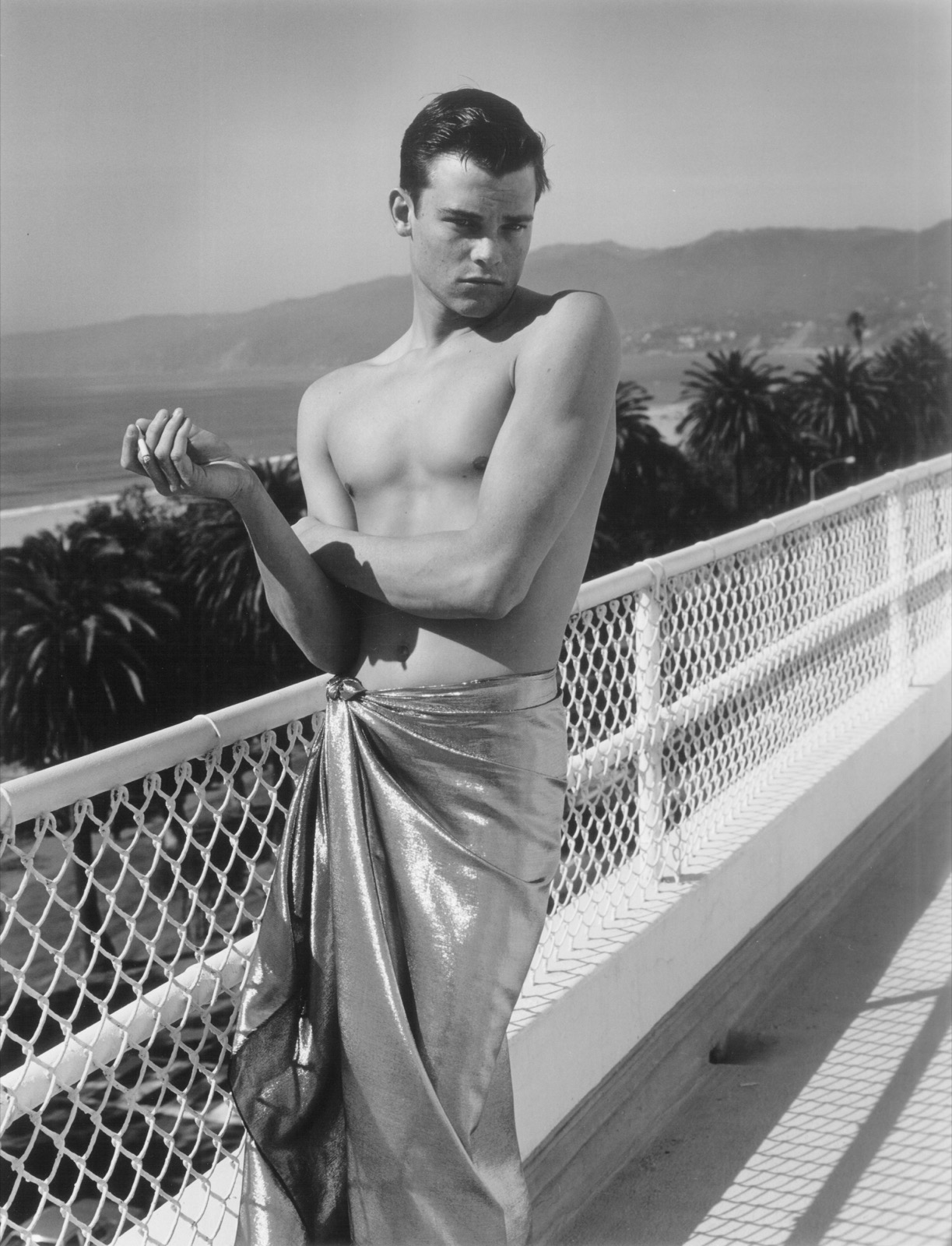

Silver does most of the talking here — a length of lamé knotted low and falling in liquid pleats, the one molten surface in a picture otherwise built from chain-link diamonds and the long pale smear of the Santa Monica shore. It catches the California light and throws it back wet, the kind of fabric a stylist pulls at the last second and Weber turns into the whole erotic engine of the frame. Against that shimmer everything else goes matte: the dull wire of the fence, the soft gray haze of bay and palm, the cool tone of skin.
Then the boy. He's all of nineteen, maybe, hair slicked dark, one arm hooked over a white pipe railing, jaw set, daring you to look. You look. This is Weber in his eighties pomp, the decade he rewrote the rules of how American men could be photographed — and sold. He had already moved past the magazine page: the Calvin Klein campaigns, the casual nudity, the salt-and-sun mythology that put him everywhere. What keeps the image from sliding into pure beefcake is his classicism — a full, unhurried tonal run from the silver wrap to the dissolving Malibu hills, the body described rather than flaunted. The eroticism reads as poise. The fence presses him toward us; the bay and the palms retreat behind the wire, so he's both pinned and offered.
Weber carried this charge from editorial into the museum — prints at the Whitney, at the International Center of Photography. An early gelatin silver print, edition of fifteen, from the Santa Monica work that made the name.