There is a long line of pictures in which two young men meet in a wood, and this belongs to it. Baron von Gloeden posed his Sicilian boys among the laurels; Thomas Eakins photographed his students at the swimming hole; behind them both stand the Greek frieze and Whitman’s talk of comrades. Weber knows the genealogy and steps calmly into it. Two bare-shouldered men clasp hands above their heads beneath a lichened old tree, foreheads almost touching, their wet hair combed dark against the light.
What the older pictures often strained for, Weber lets happen quietly. The gesture could be a contest, an arm bent to test another’s strength, but the leaning heads and the ease in it read instead as tenderness, or as something the two of them have not yet named. Sunlight falls through the branches and scatters across their skin in coins of brightness, the same dapple that mottles the bark behind them, so that the men and the tree share one weather. Nothing is declared. The picture trusts us to look gently.
Weber did more than sell clothes in the 1980s; he proposed an American Arcadia, a country of lakes and forests where the body could be shown without shame and affection between men pictured as natural fact. Here that project narrows to two figures and a tree. The warm-toned gelatin silver print deepens the browns of skin and bark until they seem the same substance, and holds the dappled light without hardening it. It is an old subject, made to feel newly, breathably true.
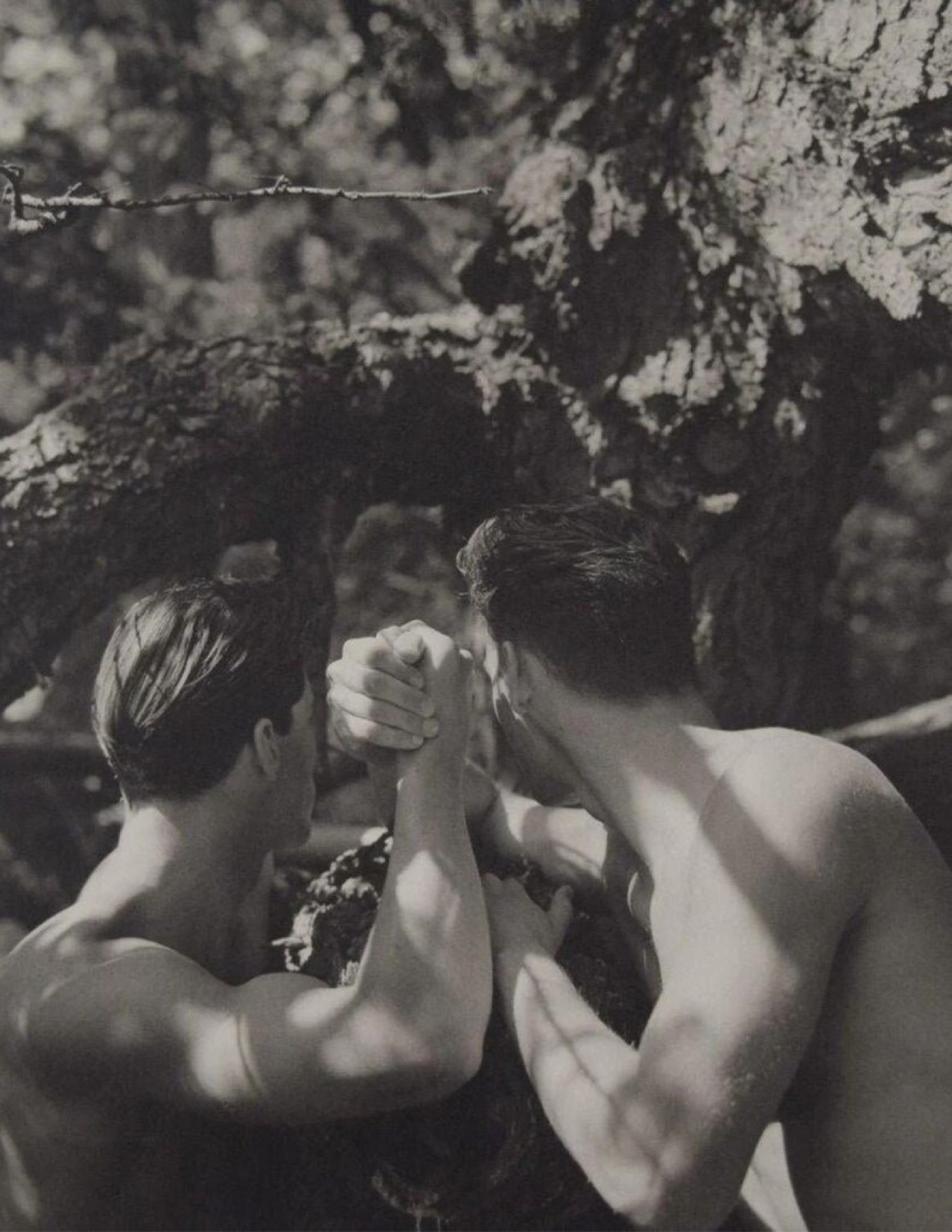

There is a long line of pictures in which two young men meet in a wood, and this belongs to it. Baron von Gloeden posed his Sicilian boys among the laurels; Thomas Eakins photographed his students at the swimming hole; behind them both stand the Greek frieze and Whitman’s talk of comrades. Weber knows the genealogy and steps calmly into it. Two bare-shouldered men clasp hands above their heads beneath a lichened old tree, foreheads almost touching, their wet hair combed dark against the light.
What the older pictures often strained for, Weber lets happen quietly. The gesture could be a contest, an arm bent to test another’s strength, but the leaning heads and the ease in it read instead as tenderness, or as something the two of them have not yet named. Sunlight falls through the branches and scatters across their skin in coins of brightness, the same dapple that mottles the bark behind them, so that the men and the tree share one weather. Nothing is declared. The picture trusts us to look gently.
Weber did more than sell clothes in the 1980s; he proposed an American Arcadia, a country of lakes and forests where the body could be shown without shame and affection between men pictured as natural fact. Here that project narrows to two figures and a tree. The warm-toned gelatin silver print deepens the browns of skin and bark until they seem the same substance, and holds the dappled light without hardening it. It is an old subject, made to feel newly, breathably true.