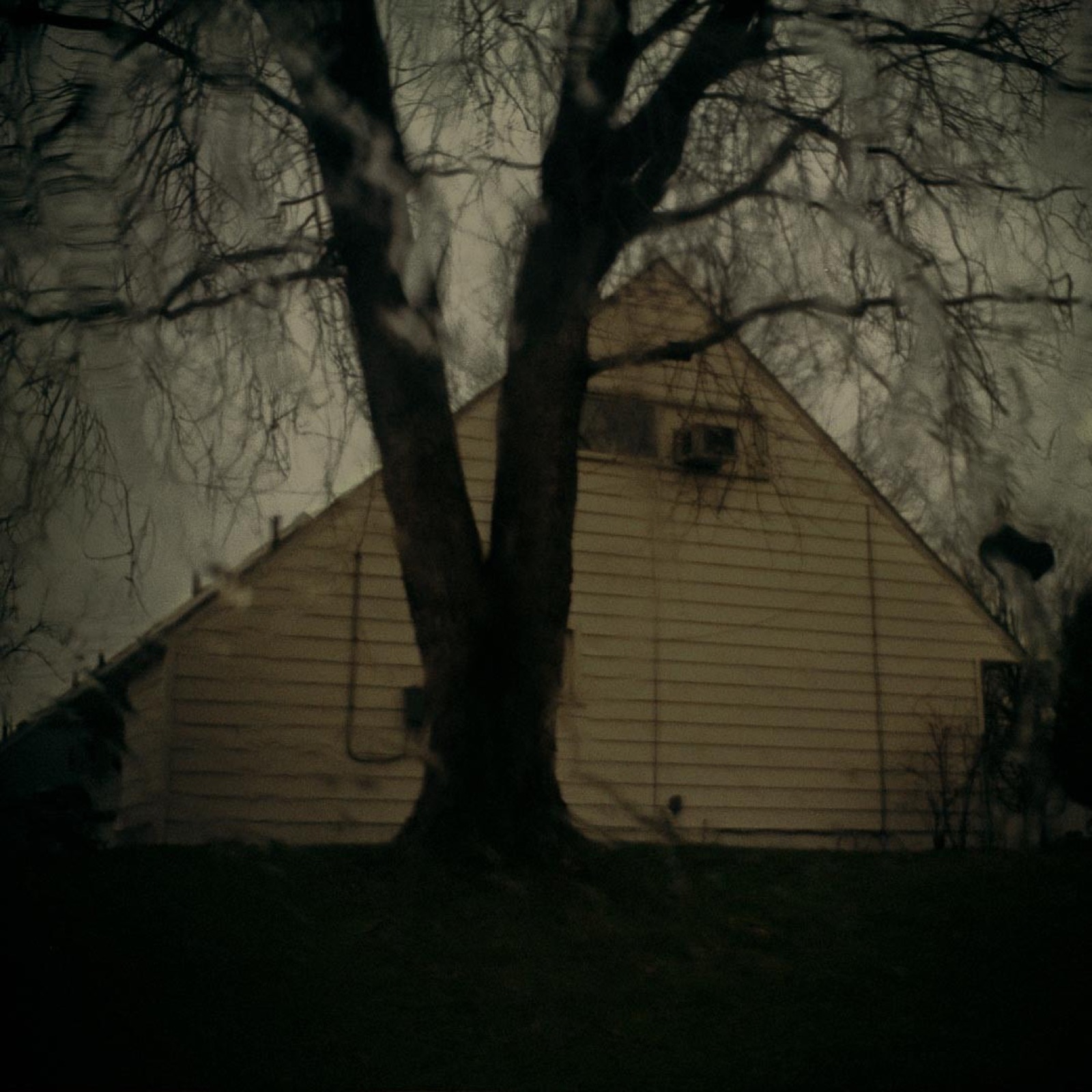
Dusk has bruised the sky to a soft violet, and a bare tree divides the frame, its two dark trunks rising from a black foreground toward a tangle of winter branches. Behind that screen of limbs a pale house shows its gabled end, seeming to hover just out of reach; a small window sits high in the gable, unlit. The whole picture is soft, almost smudged, as if seen through tears or a long exposure.
This comes from Excerpts from Silver Meadows, the project in which Hido returned, obliquely, to the terrain of his Ohio boyhood. He has spoken of wanting these later pictures to feel like memory and unease braided together, and one senses that here: the tree stands sentinel before the house like a guardian or an obstacle, the way a childhood home can be both refuge and something one cannot quite approach again.
I find the restraint admirable. Nothing is staged, there is no figure, only a house, a tree, and the failing light, yet the accumulated feeling is considerable. The image belongs to a long American tradition of the vernacular house as emotional subject, from the Farm Security Administration onward, here pushed toward the interior and the dreamlike. Printed as an archival pigment on Dibond, the low tonalities keep their mystery, and the house stays where memory keeps such things, near and unreachable at once.

Dusk has bruised the sky to a soft violet, and a bare tree divides the frame, its two dark trunks rising from a black foreground toward a tangle of winter branches. Behind that screen of limbs a pale house shows its gabled end, seeming to hover just out of reach; a small window sits high in the gable, unlit. The whole picture is soft, almost smudged, as if seen through tears or a long exposure.
This comes from Excerpts from Silver Meadows, the project in which Hido returned, obliquely, to the terrain of his Ohio boyhood. He has spoken of wanting these later pictures to feel like memory and unease braided together, and one senses that here: the tree stands sentinel before the house like a guardian or an obstacle, the way a childhood home can be both refuge and something one cannot quite approach again.
I find the restraint admirable. Nothing is staged, there is no figure, only a house, a tree, and the failing light, yet the accumulated feeling is considerable. The image belongs to a long American tradition of the vernacular house as emotional subject, from the Farm Security Administration onward, here pushed toward the interior and the dreamlike. Printed as an archival pigment on Dibond, the low tonalities keep their mystery, and the house stays where memory keeps such things, near and unreachable at once.