Archival pigment print mounted on aluminium Dibond.
One Size Only / 50.8 x 40.6 cm / 20 x 16 in
Hand-signed by the artist, with title, date, and edition number inscribed in ink on an archival label affixed to the reverse side of the mounted photograph
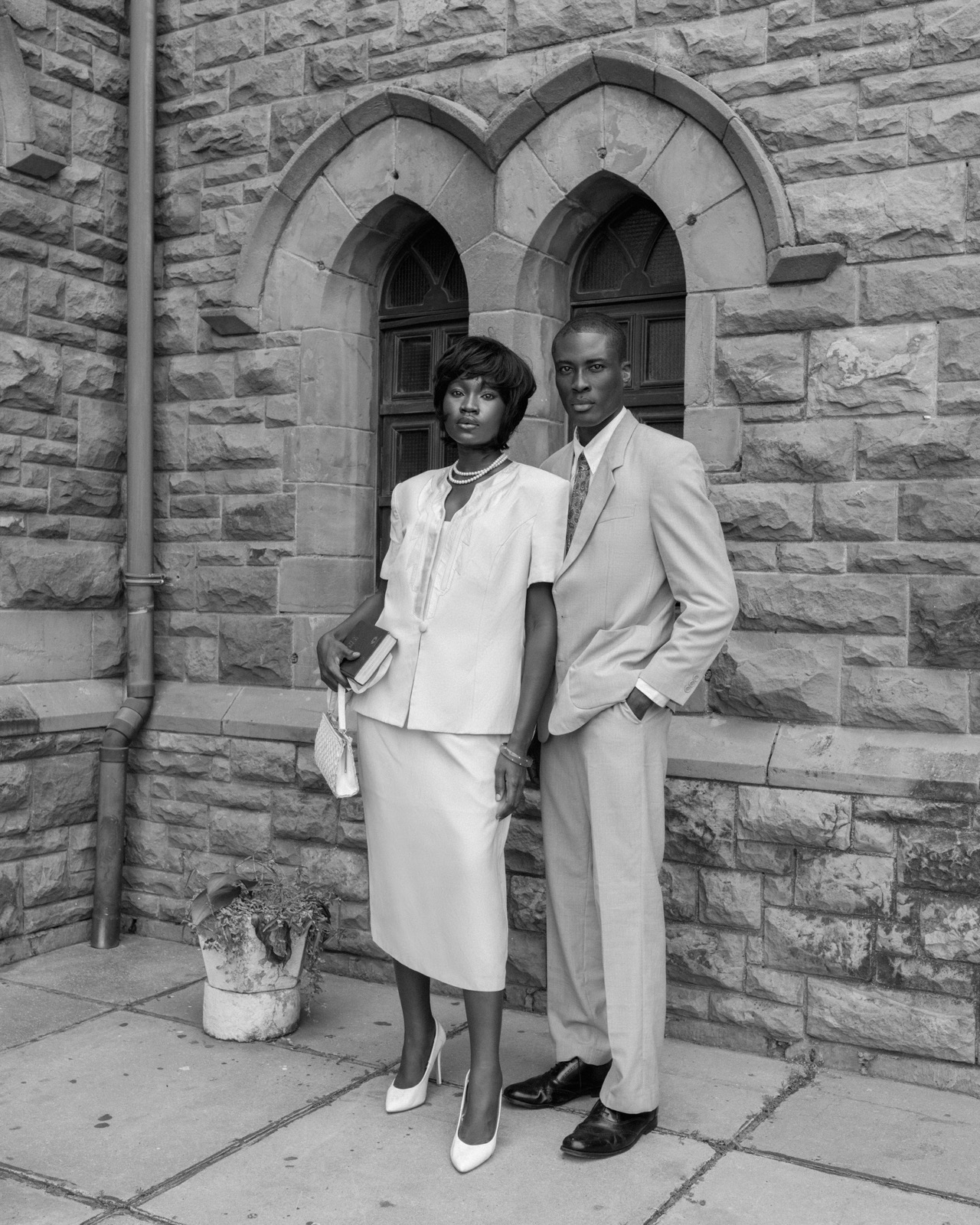
The stone comes first. Two pointed arches rise over the doorway, each one filled with dark wood, and the rough-coursed masonry around them holds an even, overcast light, the kind that flatters nothing and forgives everything. A drainpipe runs down the seam between the bays. At the base of the wall, easy to miss, a clay pot holds a small dry plant, a little outpost of the domestic against all that ecclesiastical weight. This is a church, or the idea of one, and the grey day lends it the temperature of memory rather than event.
Only then do you meet the two people who have dressed for it. She stands in a pale skirt suit, pearls doubled at her throat, white pumps set just so on the paving, a small book pressed to her side and a white clutch held lightly in the other hand. He is beside her in a light suit and a patterned tie, one hand sunk in his pocket with a composure that is half ease, half ceremony. Neither smiles. They give the camera the seriousness that earlier generations gave it, the face you assemble when a likeness is meant to last.
What moves me is the quietness of the staging — how thoroughly it knows the album it descends from, the studio portrait and the wedding-day photograph kept in a parlour drawer in Accra or in any city of the diaspora. Idun-Tawiah, born in 1995 and among the most watchful of the young Ghanaian image-makers, restages that vernacular without irony. The print, archival pigment on aluminium and held to a single intimate format, belongs to The Family Photograph, a series that treats Black domestic memory as something worth dressing up for. To stand before it is to be entrusted with someone's idea of dignity, and to find that it holds.

The stone comes first. Two pointed arches rise over the doorway, each one filled with dark wood, and the rough-coursed masonry around them holds an even, overcast light, the kind that flatters nothing and forgives everything. A drainpipe runs down the seam between the bays. At the base of the wall, easy to miss, a clay pot holds a small dry plant, a little outpost of the domestic against all that ecclesiastical weight. This is a church, or the idea of one, and the grey day lends it the temperature of memory rather than event.
Only then do you meet the two people who have dressed for it. She stands in a pale skirt suit, pearls doubled at her throat, white pumps set just so on the paving, a small book pressed to her side and a white clutch held lightly in the other hand. He is beside her in a light suit and a patterned tie, one hand sunk in his pocket with a composure that is half ease, half ceremony. Neither smiles. They give the camera the seriousness that earlier generations gave it, the face you assemble when a likeness is meant to last.
What moves me is the quietness of the staging — how thoroughly it knows the album it descends from, the studio portrait and the wedding-day photograph kept in a parlour drawer in Accra or in any city of the diaspora. Idun-Tawiah, born in 1995 and among the most watchful of the young Ghanaian image-makers, restages that vernacular without irony. The print, archival pigment on aluminium and held to a single intimate format, belongs to The Family Photograph, a series that treats Black domestic memory as something worth dressing up for. To stand before it is to be entrusted with someone's idea of dignity, and to find that it holds.