How does a contemporary photographer make a sublime landscape without embarrassment? Hido's answer here is to frame it almost as a stage set: a dark headland pushed to the far left like a wing of scenery, a low black band of land, and above them a vast churning sky in which the sun glows through torn cloud. A thin seam of luminous sea divides earth from weather. The drama is enormous and entirely composed.
Part of End Sends Advance Warning, the image knowingly courts the Romantic tradition — Friedrich's skies, the nineteenth-century marine sublime — while keeping a cool contemporary awareness of that inheritance. This is an archival pigment print on Dibond, its darkness deep and its highlights controlled, and nothing about its grandeur is naive. Hido stages nature the way he stages his houses: found, then framed until it turns theatrical.
The constructedness lies in the withholding. He gives us weather at its most operatic and then denies us any figure, any narrative, any coast we could name. What remains is mood as pure composition, a picture that borrows the authority of the sublime while quietly conceding that, for us, the sublime can only ever be quoted. It is grand and self-aware at once, and stronger for holding both.
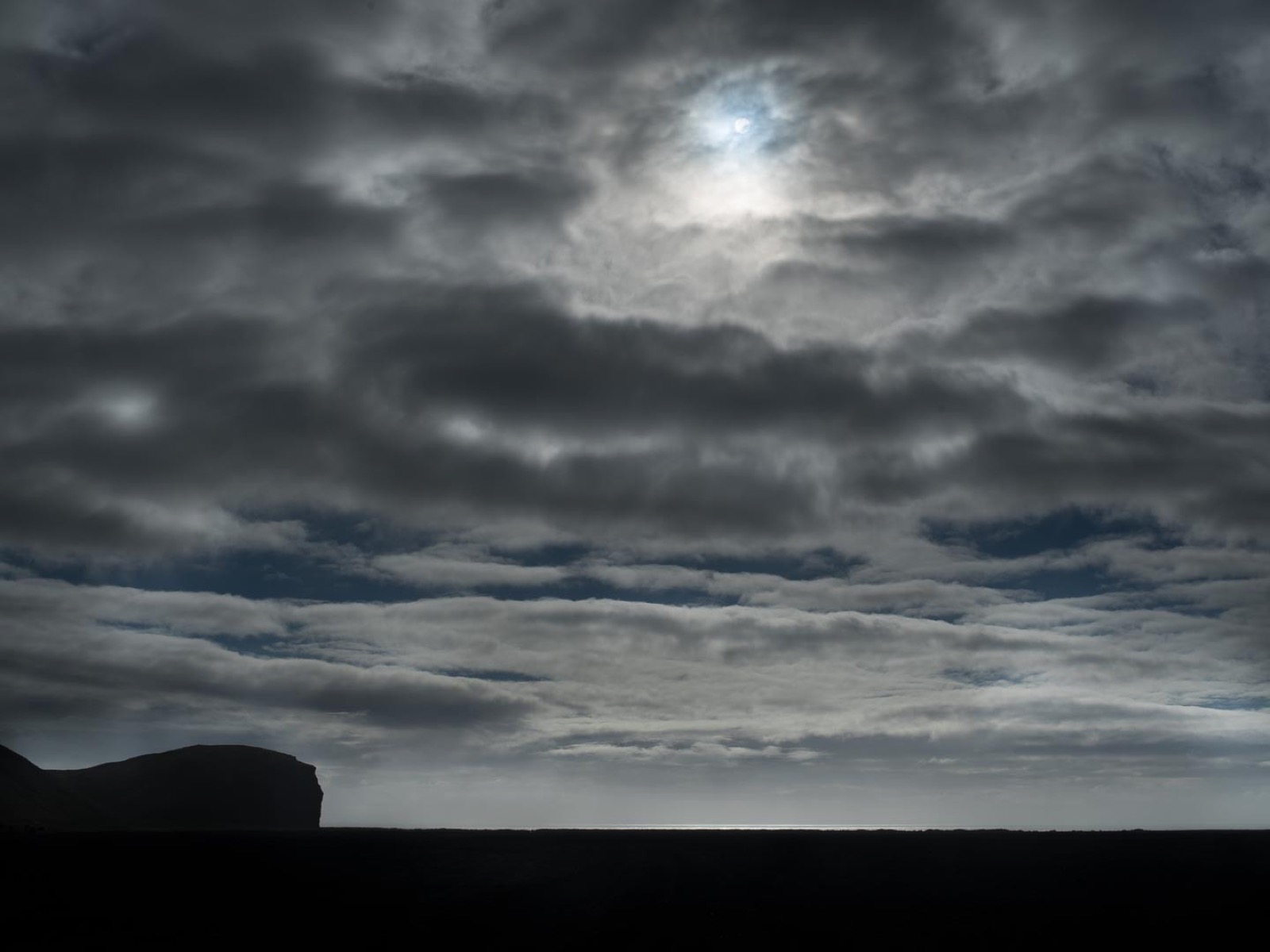
How does a contemporary photographer make a sublime landscape without embarrassment? Hido's answer here is to frame it almost as a stage set: a dark headland pushed to the far left like a wing of scenery, a low black band of land, and above them a vast churning sky in which the sun glows through torn cloud. A thin seam of luminous sea divides earth from weather. The drama is enormous and entirely composed.
Part of End Sends Advance Warning, the image knowingly courts the Romantic tradition — Friedrich's skies, the nineteenth-century marine sublime — while keeping a cool contemporary awareness of that inheritance. This is an archival pigment print on Dibond, its darkness deep and its highlights controlled, and nothing about its grandeur is naive. Hido stages nature the way he stages his houses: found, then framed until it turns theatrical.
The constructedness lies in the withholding. He gives us weather at its most operatic and then denies us any figure, any narrative, any coast we could name. What remains is mood as pure composition, a picture that borrows the authority of the sublime while quietly conceding that, for us, the sublime can only ever be quoted. It is grand and self-aware at once, and stronger for holding both.