The road empties into whiteness. It curves gently to the left and then is simply gone, erased by a fog that has taken the far distance and given back nothing — no horizon, no destination, only a soft dissolving pallor where the world should continue. Along the right, tall trees stand sheathed in hoarfrost, their branches furred with ice, and one bare limb hangs broken, snapped off pale against the mist.
The general picture is easy to admire: a frosted winter lane of great delicacy, the kind of scene that gets called serene. But it is that broken branch that catches and holds, a small wound in an otherwise flawless surface, the one thing already damaged. I cannot stop returning to it, though the photograph gives it no more weight than the frost or the ruts in the snow.
Part of End Sends Advance Warning and printed as archival pigment on Dibond, the image keeps its silvered, near-monochrome cold intact. What it certifies is only this: on some frozen morning, this road ran out into fog, and this limb had already fallen. The serenity is real, and so is the small death inside it, and the photograph, indifferent, keeps them both — leaving the ache to me. Perhaps that is why the frost pictures unsettle more than the outright ruins: nothing here is wrong, only paused, the whole white lane holding its breath at the exact edge where beauty and disappearance become the same gesture.
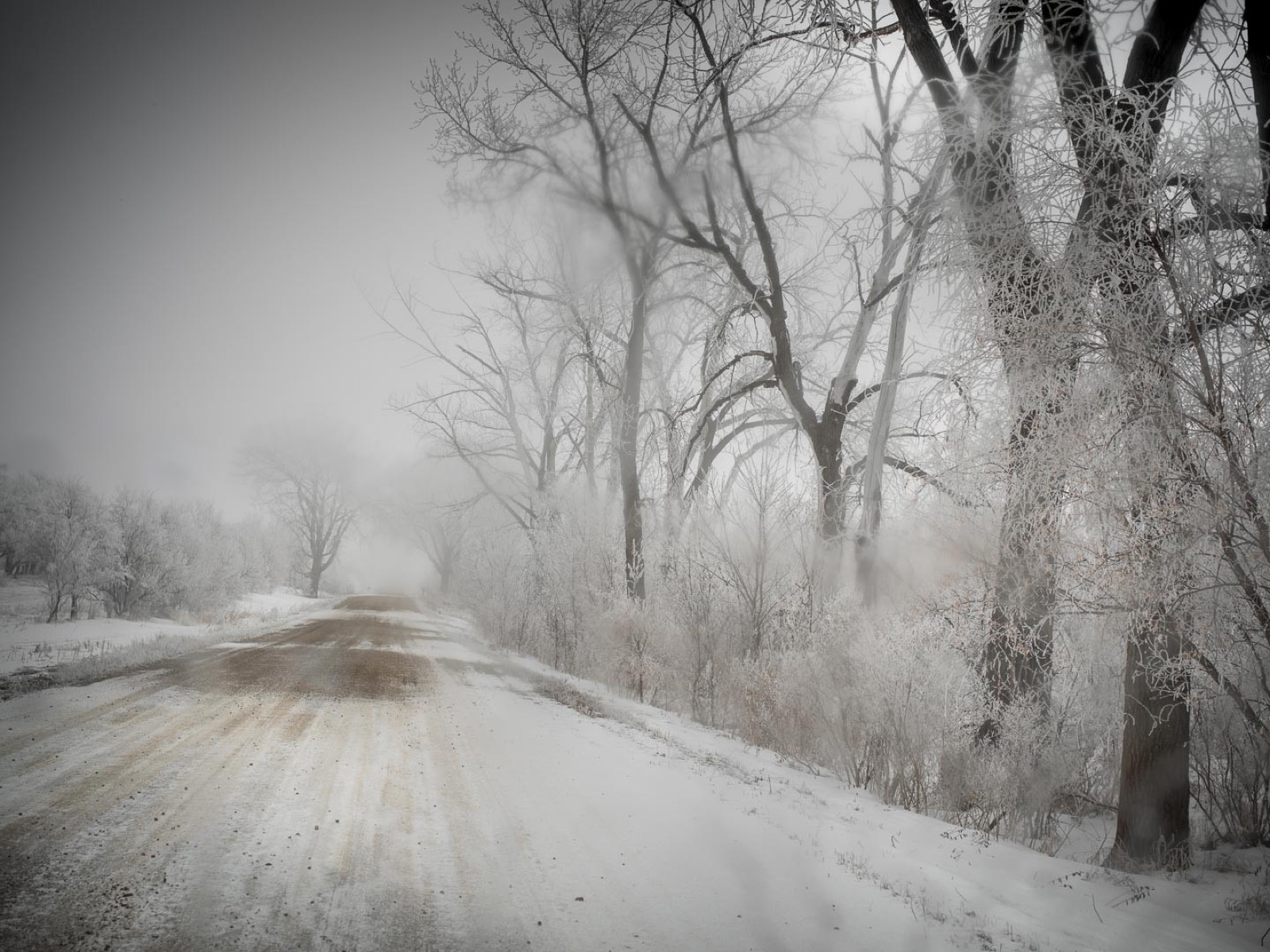

The road empties into whiteness. It curves gently to the left and then is simply gone, erased by a fog that has taken the far distance and given back nothing — no horizon, no destination, only a soft dissolving pallor where the world should continue. Along the right, tall trees stand sheathed in hoarfrost, their branches furred with ice, and one bare limb hangs broken, snapped off pale against the mist.
The general picture is easy to admire: a frosted winter lane of great delicacy, the kind of scene that gets called serene. But it is that broken branch that catches and holds, a small wound in an otherwise flawless surface, the one thing already damaged. I cannot stop returning to it, though the photograph gives it no more weight than the frost or the ruts in the snow.
Part of End Sends Advance Warning and printed as archival pigment on Dibond, the image keeps its silvered, near-monochrome cold intact. What it certifies is only this: on some frozen morning, this road ran out into fog, and this limb had already fallen. The serenity is real, and so is the small death inside it, and the photograph, indifferent, keeps them both — leaving the ache to me. Perhaps that is why the frost pictures unsettle more than the outright ruins: nothing here is wrong, only paused, the whole white lane holding its breath at the exact edge where beauty and disappearance become the same gesture.