Archival pigment print mounted on aluminium Dibond.
One Size Only / 61 x 76.2 cm / 24 x 30 in
Hand-signed by the artist, with title, date, and edition number inscribed in ink on an archival label affixed to the reverse side of the mounted photograph
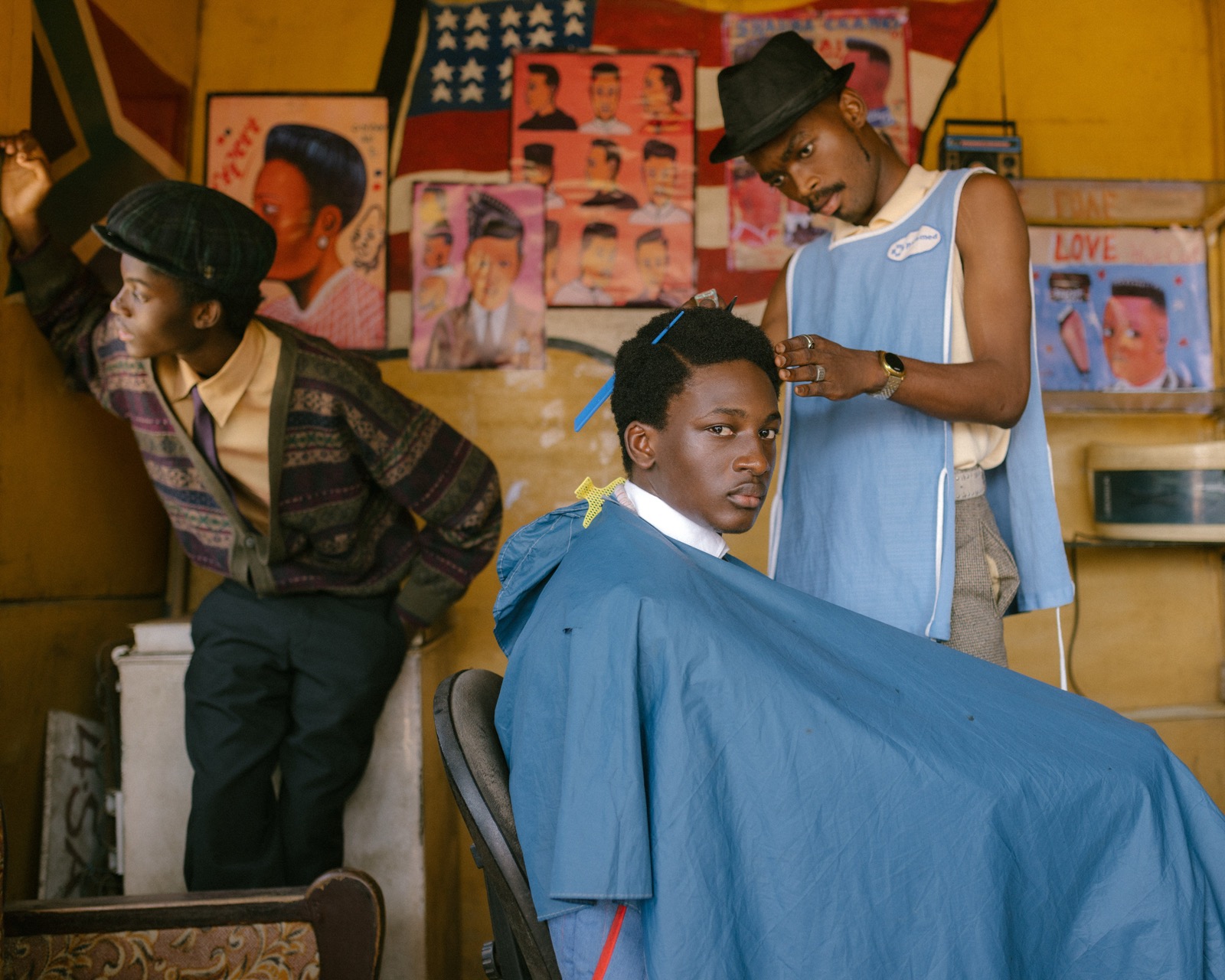
The boy in the chair gives us the full weight of his gaze — the steadiest thing in the room. A blue comb stands upright in his hair like a flag nobody thought to remove; the cobalt cape falls from his throat to the floor, turning him into one calm column of colour. Around him the shop hums with style — the barber in black hat and pale-blue smock leaning in with a jeweller’s concentration, the friend at left propped against the wall in flat cap and thrifted cardigan, looking elsewhere.
Idun-Tawiah loads the back wall with desire and instruction: hand-painted barber’s charts, each head a catalogue of cuts a man might wear, flanked by a lettered LOVE and the colours of two flags. It is a wall about looking — at other men, at the selves you might style yourself into. The barber watches his hands, the boy watches us, the third figure some private middle distance; what holds them is the easy, unspoken intimacy of men who share a room.
The image belongs to “Boys Will Always Be Boys” (2023), Idun-Tawiah’s reckoning with the friendships of his Accra boyhood, and what keeps it clear of nostalgia is its appetite for surface — the nubby weave of the cardigan, the watch on the barber’s wrist, cape rhyming with smock so the two men wear the same blue without touching. The barbershop becomes a theatre of black boyhood, where grooming is care and a haircut a rite of belonging. He does not sentimentalise; he lets you stand close and look, the way the boy in the chair is looking back.
The boy in the chair gives us the full weight of his gaze — the steadiest thing in the room. A blue comb stands upright in his hair like a flag nobody thought to remove; the cobalt cape falls from his throat to the floor, turning him into one calm column of colour. Around him the shop hums with style — the barber in black hat and pale-blue smock leaning in with a jeweller’s concentration, the friend at left propped against the wall in flat cap and thrifted cardigan, looking elsewhere.
Idun-Tawiah loads the back wall with desire and instruction: hand-painted barber’s charts, each head a catalogue of cuts a man might wear, flanked by a lettered LOVE and the colours of two flags. It is a wall about looking — at other men, at the selves you might style yourself into. The barber watches his hands, the boy watches us, the third figure some private middle distance; what holds them is the easy, unspoken intimacy of men who share a room.
The image belongs to “Boys Will Always Be Boys” (2023), Idun-Tawiah’s reckoning with the friendships of his Accra boyhood, and what keeps it clear of nostalgia is its appetite for surface — the nubby weave of the cardigan, the watch on the barber’s wrist, cape rhyming with smock so the two men wear the same blue without touching. The barbershop becomes a theatre of black boyhood, where grooming is care and a haircut a rite of belonging. He does not sentimentalise; he lets you stand close and look, the way the boy in the chair is looking back.