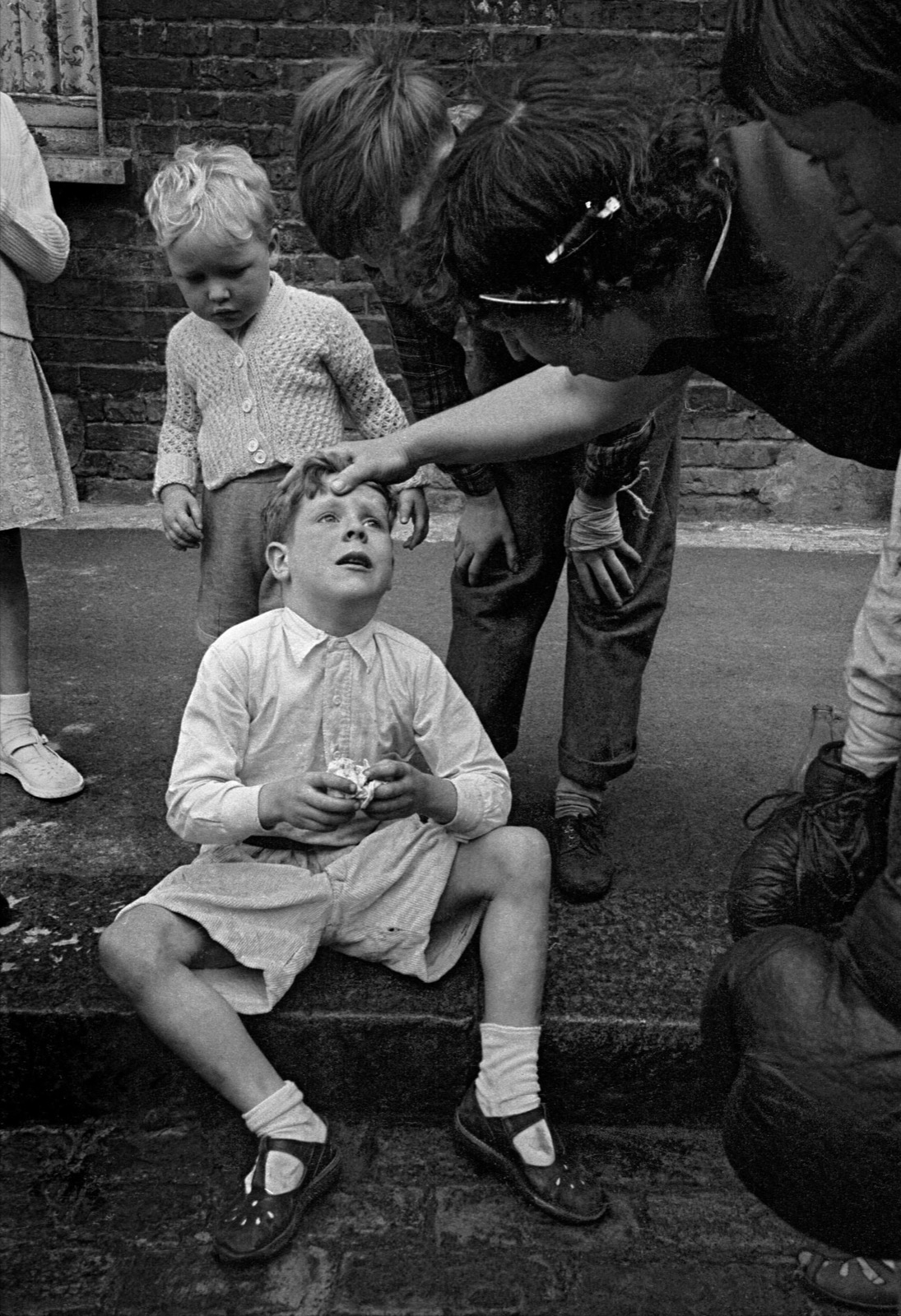
The boxing glove hangs at the right edge like a discarded prop, and that is the joke and the heartbreak of this frame: the fight is over, and the loser is the small boy on the curb, chin up, mouth open in a wail, while a grown hand presses flat against his forehead as if to read his temperature or push him back into composure. Horvat has caught the exact second after the spectacle, when the staged ferocity of two children playing men collapses into snot and tears and the consolation of adults. Look at the polished buckled shoes, the white socks slipping down — somebody dressed this boy carefully this morning, and the afternoon has undone him.
What pricks me is the blond toddler in the knitted cardigan, off to the left, watching the casualty with the grave neutrality of a child too young to know whether to be frightened. He is the future audience of every fight, learning the rules of the body and its hierarchies in a Lambeth backyard. Horvat, Italian-born and freshly arrived in London after his years roaming Asia for Picture Post and Réalités, photographs this with the reporter's appetite for the unposed and the couturier's eye he would soon take to Paris fashion — the brick wall, the chalk-scuffed pavement, the bodies arranged by accident into something composed.
It is a humanist picture without the sugar: tender to the weeping boy, but unsentimental about the small cruelties of play. Among the early London street work that announced one of the century's most versatile lenses, this is the frame where Horvat lets the loser keep his dignity and his tears at once.

The boxing glove hangs at the right edge like a discarded prop, and that is the joke and the heartbreak of this frame: the fight is over, and the loser is the small boy on the curb, chin up, mouth open in a wail, while a grown hand presses flat against his forehead as if to read his temperature or push him back into composure. Horvat has caught the exact second after the spectacle, when the staged ferocity of two children playing men collapses into snot and tears and the consolation of adults. Look at the polished buckled shoes, the white socks slipping down — somebody dressed this boy carefully this morning, and the afternoon has undone him.
What pricks me is the blond toddler in the knitted cardigan, off to the left, watching the casualty with the grave neutrality of a child too young to know whether to be frightened. He is the future audience of every fight, learning the rules of the body and its hierarchies in a Lambeth backyard. Horvat, Italian-born and freshly arrived in London after his years roaming Asia for Picture Post and Réalités, photographs this with the reporter's appetite for the unposed and the couturier's eye he would soon take to Paris fashion — the brick wall, the chalk-scuffed pavement, the bodies arranged by accident into something composed.
It is a humanist picture without the sugar: tender to the weeping boy, but unsentimental about the small cruelties of play. Among the early London street work that announced one of the century's most versatile lenses, this is the frame where Horvat lets the loser keep his dignity and his tears at once.