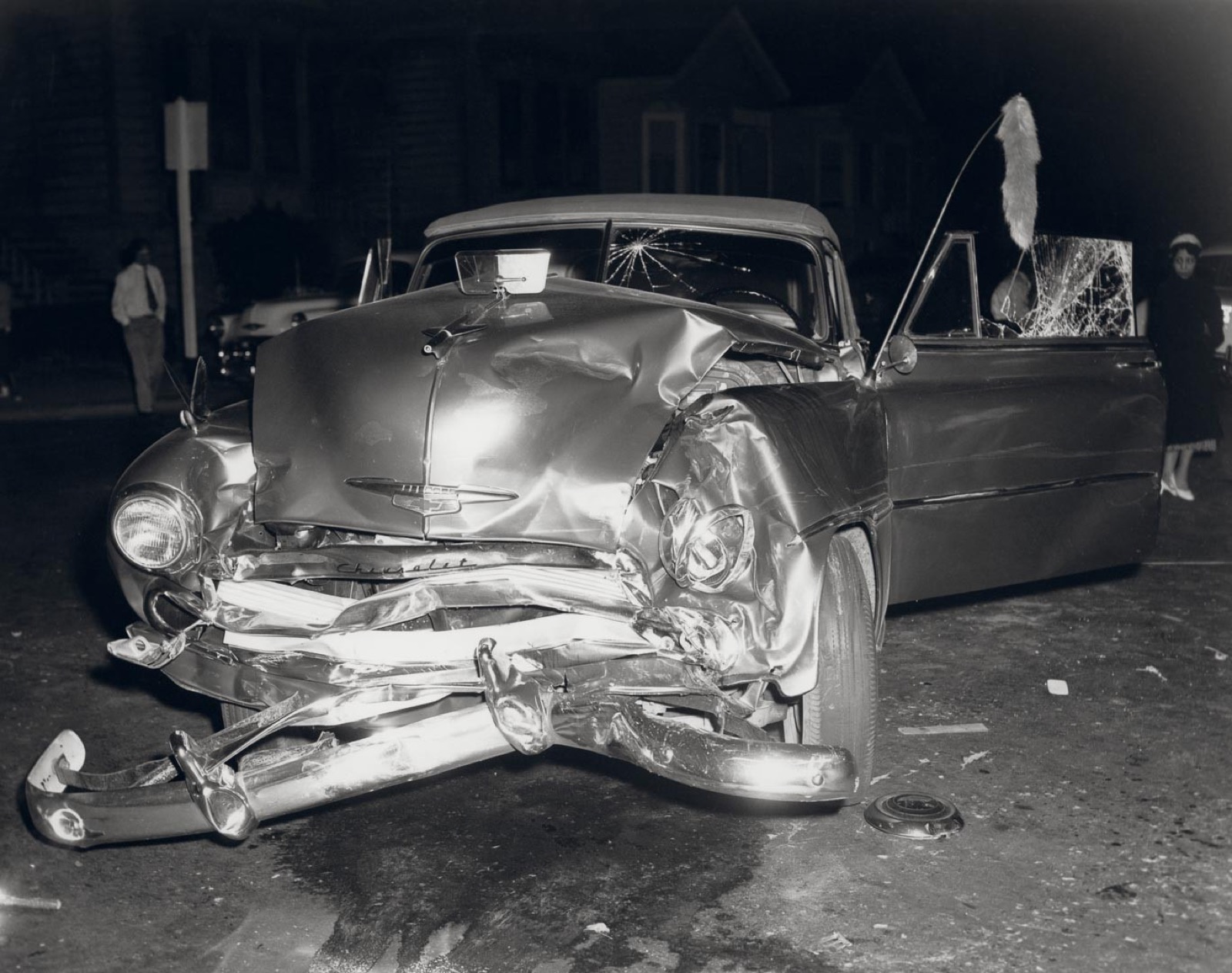
A wrecked car sits at the centre of everything — its front end folded like foil, the heavy chrome bumper torn loose in the road, the windshield webbed by a single blow. This is not a photograph Hido made in the usual sense. It is a found image, a mid-century press or insurance picture of a Chevrolet after a night collision, brought into his project and re-presented as his own.
The gesture has a history. Appropriated vernacular photographs, especially the flash-lit crime and accident pictures of the 1940s and 50s, have circulated through art since Warhol, prized for their brutal clarity and indifference to composition. Hido's move is quieter: he folds such an image into Excerpts from Silver Meadows, letting a stranger's catastrophe stand for the buried violence beneath a remembered American childhood.
The picture rewards close reading. Two bystanders frame the scene — a man in shirtsleeves and tie at the left, a woman in a hat at the right — their calm at odds with the ruined machine between them, gabled houses receding into the dark. Reprinted as an archival pigment print on aluminium, the old negative's hard flash and deep blacks survive, so the found photograph keeps its evidentiary bluntness even while carrying someone else's dream of the past.
A wrecked car sits at the centre of everything — its front end folded like foil, the heavy chrome bumper torn loose in the road, the windshield webbed by a single blow. This is not a photograph Hido made in the usual sense. It is a found image, a mid-century press or insurance picture of a Chevrolet after a night collision, brought into his project and re-presented as his own.
The gesture has a history. Appropriated vernacular photographs, especially the flash-lit crime and accident pictures of the 1940s and 50s, have circulated through art since Warhol, prized for their brutal clarity and indifference to composition. Hido's move is quieter: he folds such an image into Excerpts from Silver Meadows, letting a stranger's catastrophe stand for the buried violence beneath a remembered American childhood.
The picture rewards close reading. Two bystanders frame the scene — a man in shirtsleeves and tie at the left, a woman in a hat at the right — their calm at odds with the ruined machine between them, gabled houses receding into the dark. Reprinted as an archival pigment print on aluminium, the old negative's hard flash and deep blacks survive, so the found photograph keeps its evidentiary bluntness even while carrying someone else's dream of the past.