A red dress in dark water is a photograph that already knows it will be looked at. The assertion is almost too easy: place a saturated figure, seen from behind, at the black lip of a lake at dusk, ring her with ripples, and seduction is guaranteed. Harvey knows this, and takes the risk anyway. The woman stands facing away, her satin catching the last light, her head cut off by the top edge, her pale legs half sunk where the water begins.
What complicates the easy beauty is the water’s answer to her. Concentric rings spread outward from where she has just stepped in, evidence that the still surface has been disturbed, that something is happening rather than merely posed. She has no face; the red is her whole identity, and the cropping refuses us her expression. Around her the lake goes from steel to near-black, and the shore behind us is a litter of dead leaves. The picture flirts with the fairy tale, the girl at the water, then withholds its ending.
Color is Harvey’s argument and her temptation both; across widely collected books and American museum walls she has insisted that saturation can carry serious feeling, that a red need not be pretty. The archival pigment print is what keeps that claim honest here, holding the dress at full intensity against a water dark enough to swallow detail, the ripples legible to their faintest ring. One succumbs to the image and distrusts the succumbing, which may be the truest response beauty this deliberate can ask.
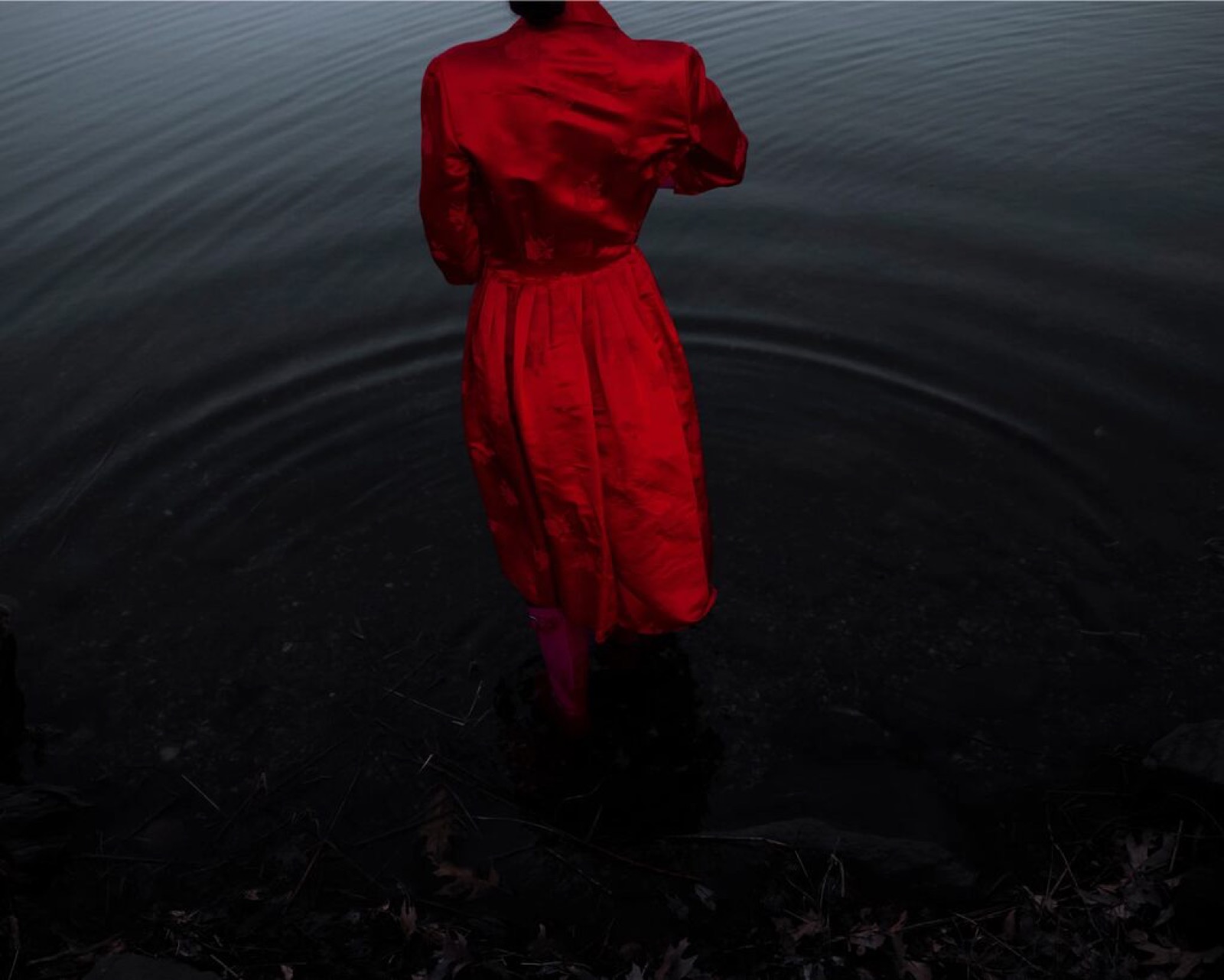

A red dress in dark water is a photograph that already knows it will be looked at. The assertion is almost too easy: place a saturated figure, seen from behind, at the black lip of a lake at dusk, ring her with ripples, and seduction is guaranteed. Harvey knows this, and takes the risk anyway. The woman stands facing away, her satin catching the last light, her head cut off by the top edge, her pale legs half sunk where the water begins.
What complicates the easy beauty is the water’s answer to her. Concentric rings spread outward from where she has just stepped in, evidence that the still surface has been disturbed, that something is happening rather than merely posed. She has no face; the red is her whole identity, and the cropping refuses us her expression. Around her the lake goes from steel to near-black, and the shore behind us is a litter of dead leaves. The picture flirts with the fairy tale, the girl at the water, then withholds its ending.
Color is Harvey’s argument and her temptation both; across widely collected books and American museum walls she has insisted that saturation can carry serious feeling, that a red need not be pretty. The archival pigment print is what keeps that claim honest here, holding the dress at full intensity against a water dark enough to swallow detail, the ripples legible to their faintest ring. One succumbs to the image and distrusts the succumbing, which may be the truest response beauty this deliberate can ask.