Four children improvise a playground out of a torn-up midtown block, stooping and reaching across the bare pavement. There is no equipment here, no fenced lot. Behind them a mound of excavated earth spills across the sidewalk, parked cars idle along the curb, and tall buildings climb into a bright sky. A girl in a plaid dress doubles over; another, lower in the frame, reaches a hand down to the pavement; a boy in a patterned shirt strides off toward a dark kiosk where a man in a hat looms.
Faurer made this picture in 1947, the year he settled in New York and began roaming midtown with a small camera, drawn less to landmarks than to the unscripted theater of the street. He had come from Philadelphia, where he learned to watch ordinary people closely, and that habit of patient observation carries into this image. He does not pose the children or sentimentalize them; he simply waits until their scattered movements compose, for an instant, into a loose human frieze across the sidewalk.
What holds the eye is the smallest figure at right, a girl in a pinstriped suit clutching a jump rope, watching the others with grave composure. She anchors the picture's social order, the still point against which the bending bodies revolve. Faurer's tenderness toward such children, and his refusal to make them quaint, mark the emergence of the sensibility that would define his finest New York work.
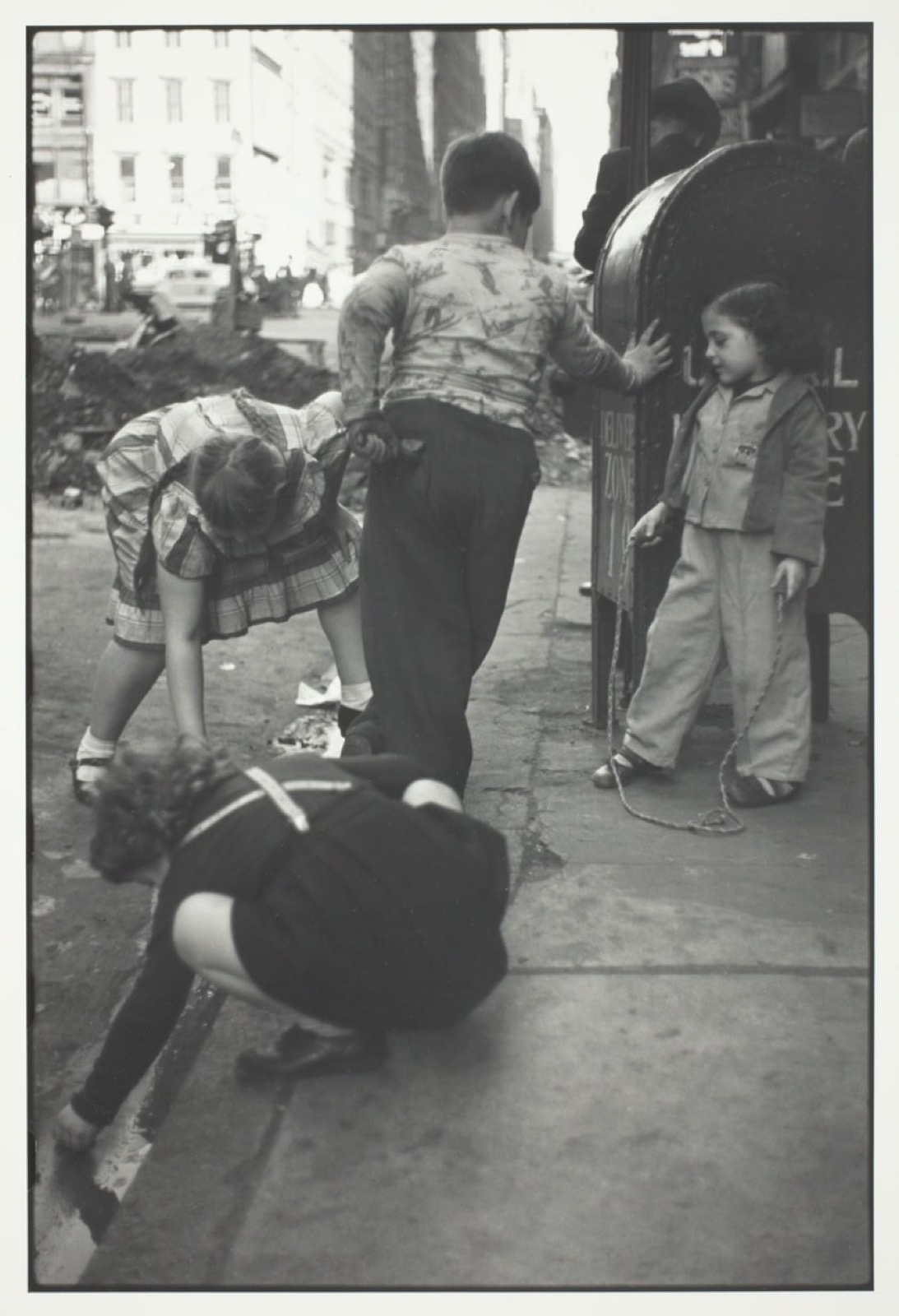

Four children improvise a playground out of a torn-up midtown block, stooping and reaching across the bare pavement. There is no equipment here, no fenced lot. Behind them a mound of excavated earth spills across the sidewalk, parked cars idle along the curb, and tall buildings climb into a bright sky. A girl in a plaid dress doubles over; another, lower in the frame, reaches a hand down to the pavement; a boy in a patterned shirt strides off toward a dark kiosk where a man in a hat looms.
Faurer made this picture in 1947, the year he settled in New York and began roaming midtown with a small camera, drawn less to landmarks than to the unscripted theater of the street. He had come from Philadelphia, where he learned to watch ordinary people closely, and that habit of patient observation carries into this image. He does not pose the children or sentimentalize them; he simply waits until their scattered movements compose, for an instant, into a loose human frieze across the sidewalk.
What holds the eye is the smallest figure at right, a girl in a pinstriped suit clutching a jump rope, watching the others with grave composure. She anchors the picture's social order, the still point against which the bending bodies revolve. Faurer's tenderness toward such children, and his refusal to make them quaint, mark the emergence of the sensibility that would define his finest New York work.