Above the mattress, a few inches of ruffled lace curtain survive, pinned against the light like a keepsake. That small flourish re-reads the room: someone once dressed this window, chose the sprigged wallpaper, the pink carpet, the crown molding painted to match, and someone else, later, stood a bare mattress against the glass and left. The curtain belongs to the first story, the mattress to the second, and the photograph holds them in a single, patient exposure.
The tonal control is exacting. Daylight enters from the left window and grazes the quilted surface, raising its braided seams into low relief; the palette runs from cream to salmon to the tea-colored stain that blooms at the mattress’s center, a mark the picture neither hides nor dramatizes. A manufacturer’s label sits sideways near the top edge; below the sill, the wallpaper is torn open above an outlet, a small dark wound in all that pattern. The eye is asked to weigh textures: lace, paper, ticking, carpet. Nothing is arranged, yet everything registers with the deliberateness of a still life.
The photographer is celebrated for the lit windows of suburban houses at night; his interiors are those pictures turned inside out, the rooms such windows conceal. Made in the mid-1990s and numbered 1637, this work shows why his prints entered SFMOMA, the Getty and the Whitney: an eye for the American room as evidence. The archival pigment print preserves the faint florals and the stain with equal fidelity, which is its quiet argument, that both deserve the record.
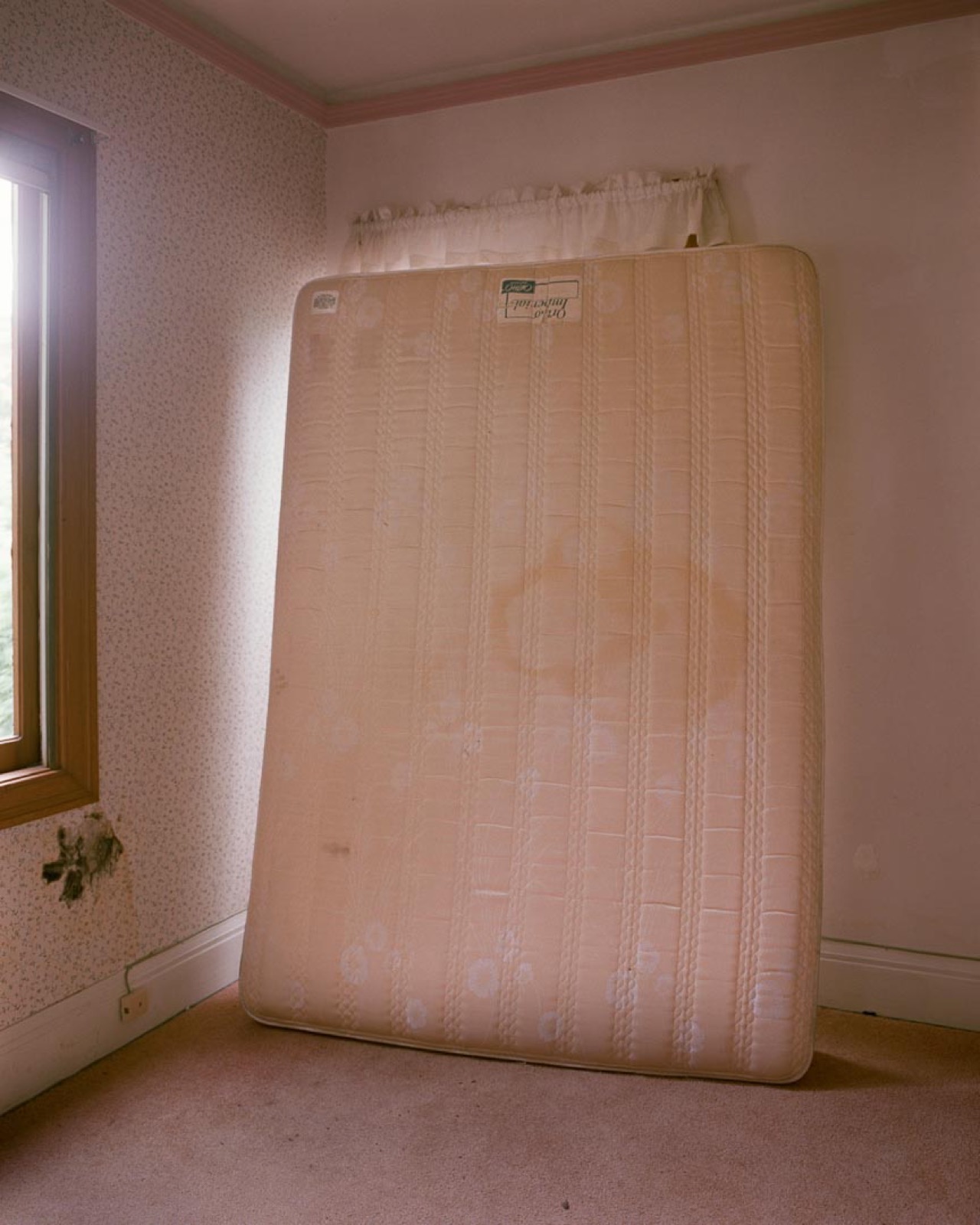

Above the mattress, a few inches of ruffled lace curtain survive, pinned against the light like a keepsake. That small flourish re-reads the room: someone once dressed this window, chose the sprigged wallpaper, the pink carpet, the crown molding painted to match, and someone else, later, stood a bare mattress against the glass and left. The curtain belongs to the first story, the mattress to the second, and the photograph holds them in a single, patient exposure.
The tonal control is exacting. Daylight enters from the left window and grazes the quilted surface, raising its braided seams into low relief; the palette runs from cream to salmon to the tea-colored stain that blooms at the mattress’s center, a mark the picture neither hides nor dramatizes. A manufacturer’s label sits sideways near the top edge; below the sill, the wallpaper is torn open above an outlet, a small dark wound in all that pattern. The eye is asked to weigh textures: lace, paper, ticking, carpet. Nothing is arranged, yet everything registers with the deliberateness of a still life.
The photographer is celebrated for the lit windows of suburban houses at night; his interiors are those pictures turned inside out, the rooms such windows conceal. Made in the mid-1990s and numbered 1637, this work shows why his prints entered SFMOMA, the Getty and the Whitney: an eye for the American room as evidence. The archival pigment print preserves the faint florals and the stain with equal fidelity, which is its quiet argument, that both deserve the record.