Weather is the protagonist here, and it behaves like one. The sky has closed to a smoked gray, except for a single pale breach high in the frame where the light gets through and falls, diluted, across snow-streaked slopes. What that light finds, it silvers: the frozen pools of the valley floor lie like shards of sky dropped onto tawny grass, and the great dark crag at the right absorbs everything, giving back only a thin lace of snow along its shoulders.
Then, almost as an afterthought, the horses. A shaggy herd stands loosely gathered beneath the rock, heads lowered to the grass, while one chestnut has drifted apart to graze at the left, doubled faintly in meltwater. They are small in the frame, and the smallness is the point: the picture keeps a traveler’s distance, the view of someone passing through on the icy track in the foreground rather than settling in. A soft bloom at the edges suggests breath or drizzle on the lens, weather insisting on being part of the optics too.
Hido made his name closer to home, photographing the American suburb at night, its windows burning like small confessions, and that sensibility travels with him: even in open country he is less a landscapist than a portraitist of light under duress. The picture’s long tonal run, from ice-white through a dozen grays to the near-black of wet rock, is exactly what the archival pigment print preserves, keeping the darks open and the pale breach luminous. His prints rest in the collections of SFMOMA, the Getty, and the Whitney; this one explains why.
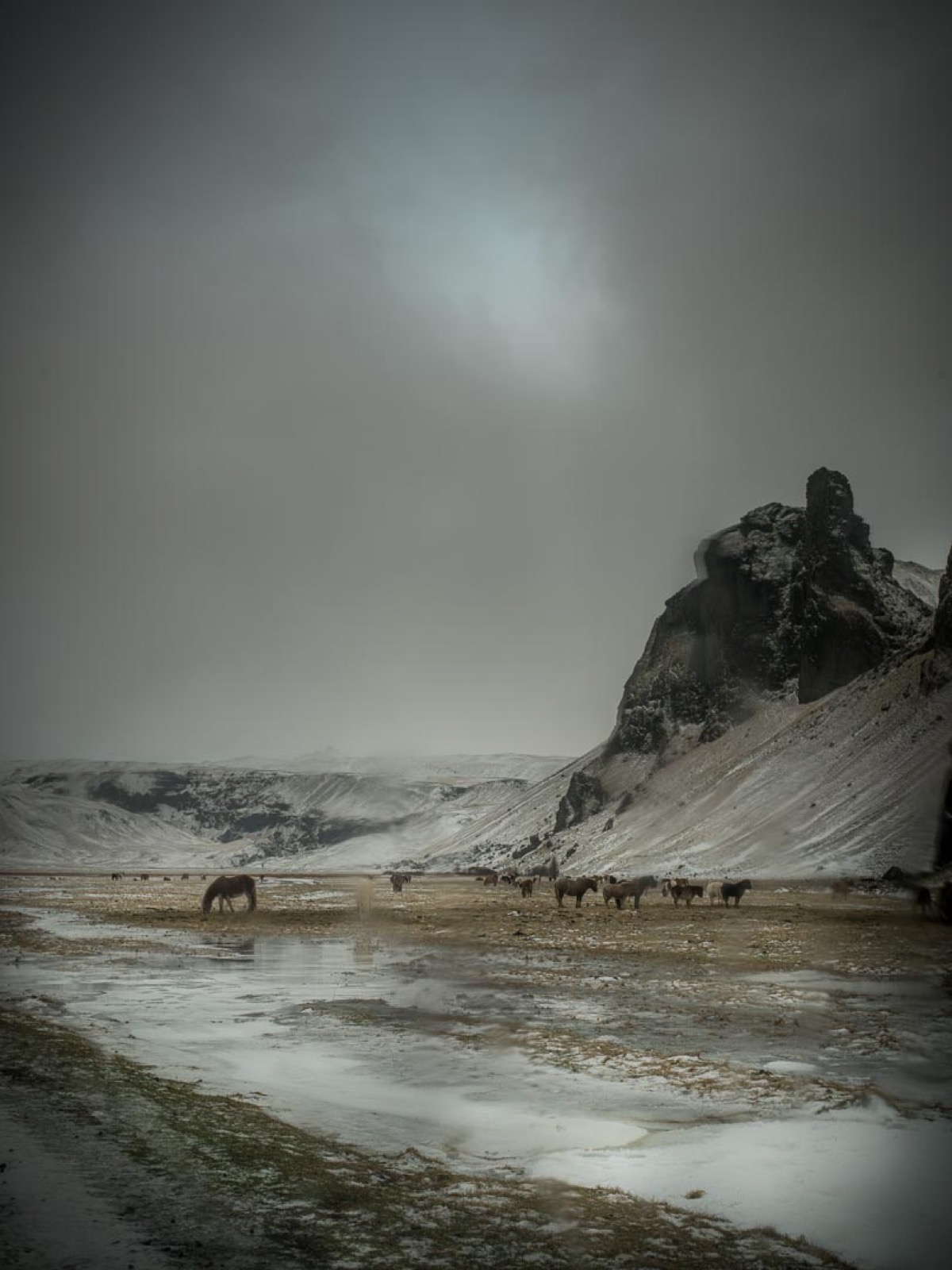

Weather is the protagonist here, and it behaves like one. The sky has closed to a smoked gray, except for a single pale breach high in the frame where the light gets through and falls, diluted, across snow-streaked slopes. What that light finds, it silvers: the frozen pools of the valley floor lie like shards of sky dropped onto tawny grass, and the great dark crag at the right absorbs everything, giving back only a thin lace of snow along its shoulders.
Then, almost as an afterthought, the horses. A shaggy herd stands loosely gathered beneath the rock, heads lowered to the grass, while one chestnut has drifted apart to graze at the left, doubled faintly in meltwater. They are small in the frame, and the smallness is the point: the picture keeps a traveler’s distance, the view of someone passing through on the icy track in the foreground rather than settling in. A soft bloom at the edges suggests breath or drizzle on the lens, weather insisting on being part of the optics too.
Hido made his name closer to home, photographing the American suburb at night, its windows burning like small confessions, and that sensibility travels with him: even in open country he is less a landscapist than a portraitist of light under duress. The picture’s long tonal run, from ice-white through a dozen grays to the near-black of wet rock, is exactly what the archival pigment print preserves, keeping the darks open and the pale breach luminous. His prints rest in the collections of SFMOMA, the Getty, and the Whitney; this one explains why.