Nobody lives here, and that absence is the subject. Todd Hido photographs the room of a foreclosed house as a set already struck: knotty wood panelling covering three walls, a lace-shaded chandelier still wired to the ceiling, a patterned vinyl floor the colour of dried brick. The archival pigment print on Dibond gives these humble surfaces a taxonomic clarity, as if the room were being catalogued rather than mourned. Within the House Hunting project, such interiors read as evidence—hence the alternate title, Witness—of lives that furnished, panelled, and then vacated a domestic space.
Hido's method is closer to the tableau than to reportage, though nothing has been arranged. The framing is frontal and deliberate, the chandelier centred like a modest altarpiece; the single electrical outlet on the panel becomes a small event. What looks documentary is in fact a decision about where a wall ends and a picture begins. The warm brown light, filtered through drawn blinds at left, is not found so much as coaxed, and it flattens the whole into something between an interior and a stage flat.
The constructed feeling here comes not from props but from stillness held past the point of comfort. We are asked to look at taste—someone's chandelier, someone's floral tiling—without the alibi of a resident. That is the contemporary move: to treat the ordinary suburban room as a readymade portrait of the people who are missing from it, and to let real estate stand in for biography.
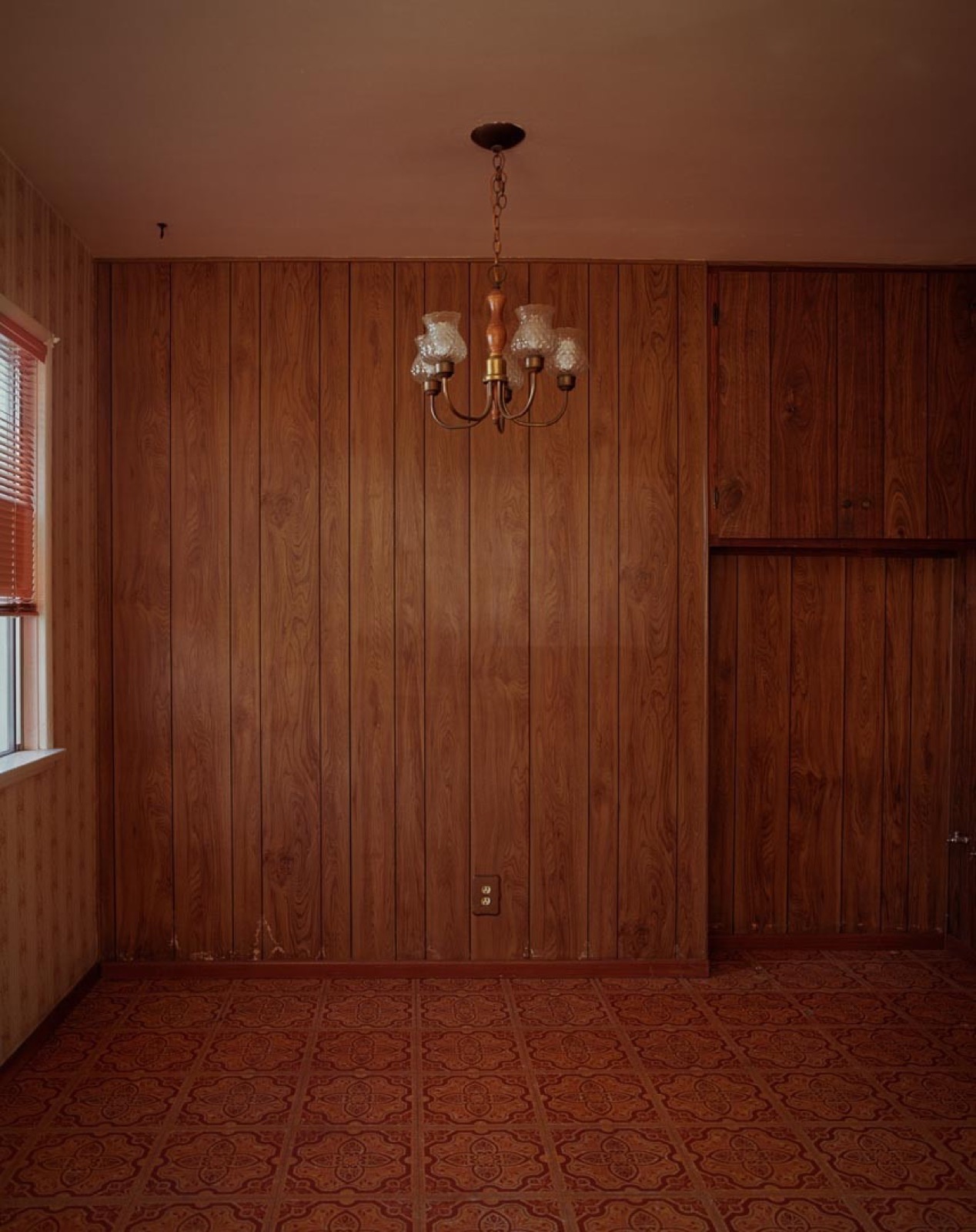

Nobody lives here, and that absence is the subject. Todd Hido photographs the room of a foreclosed house as a set already struck: knotty wood panelling covering three walls, a lace-shaded chandelier still wired to the ceiling, a patterned vinyl floor the colour of dried brick. The archival pigment print on Dibond gives these humble surfaces a taxonomic clarity, as if the room were being catalogued rather than mourned. Within the House Hunting project, such interiors read as evidence—hence the alternate title, Witness—of lives that furnished, panelled, and then vacated a domestic space.
Hido's method is closer to the tableau than to reportage, though nothing has been arranged. The framing is frontal and deliberate, the chandelier centred like a modest altarpiece; the single electrical outlet on the panel becomes a small event. What looks documentary is in fact a decision about where a wall ends and a picture begins. The warm brown light, filtered through drawn blinds at left, is not found so much as coaxed, and it flattens the whole into something between an interior and a stage flat.
The constructed feeling here comes not from props but from stillness held past the point of comfort. We are asked to look at taste—someone's chandelier, someone's floral tiling—without the alibi of a resident. That is the contemporary move: to treat the ordinary suburban room as a readymade portrait of the people who are missing from it, and to let real estate stand in for biography.