
Steven Meisel
American, b. 1954Carolyn Murphy, Alpine, New Jersey, 2012
Archival Pigment Print.
Small / Image: 50.8 x 38.4 cm / 20 x 15 1/8 in / Sheet: 61 x 50.8 cm / 24 x 20 in
Medium / Image: 101.6 x 76.7 cm / 40 x 30 1/4 in / Sheet: 106.7 x 81.8 cm / 42 x 32 1/4 in
Large TBC / Image : 152.4 x 115.1 cm / 60 x 45 1/4 in / Sheet : 157.5 x 120.1 cm / 62 x 47 1/4 in
XL TBC / Image: 195.1 x 147.3 cm / 76 3/4 x 58 in / Sheet: 200.2 x 152.4 cm / 78 3/4 x 60 in
Hand-signed by artist, titled, numbered and print date in ink label affixed to mount verso
Edition of 7 — Image: 50.8 x 38.4 cm / 20 x 15 1/8 in / Sheet: 61 x 50.8 cm / 24 x 20 in
Edition of 6 — Image: 101.6 x 76.7 cm / 40 x 30 1/4 in / Sheet: 106.7 x 81.8 cm / 42 x 32 1/4 in
Edition of 3 — Image : 152.4 x 115.1 cm / 60 x 45 1/4 in / Sheet : 157.5 x 120.1 cm / 62 x 47 1/4 in
Edition of 1 — Image: 195.1 x 147.3 cm / 76 3/4 x 58 in / Sheet: 200.2 x 152.4 cm / 78 3/4 x 60 in
© The Artist
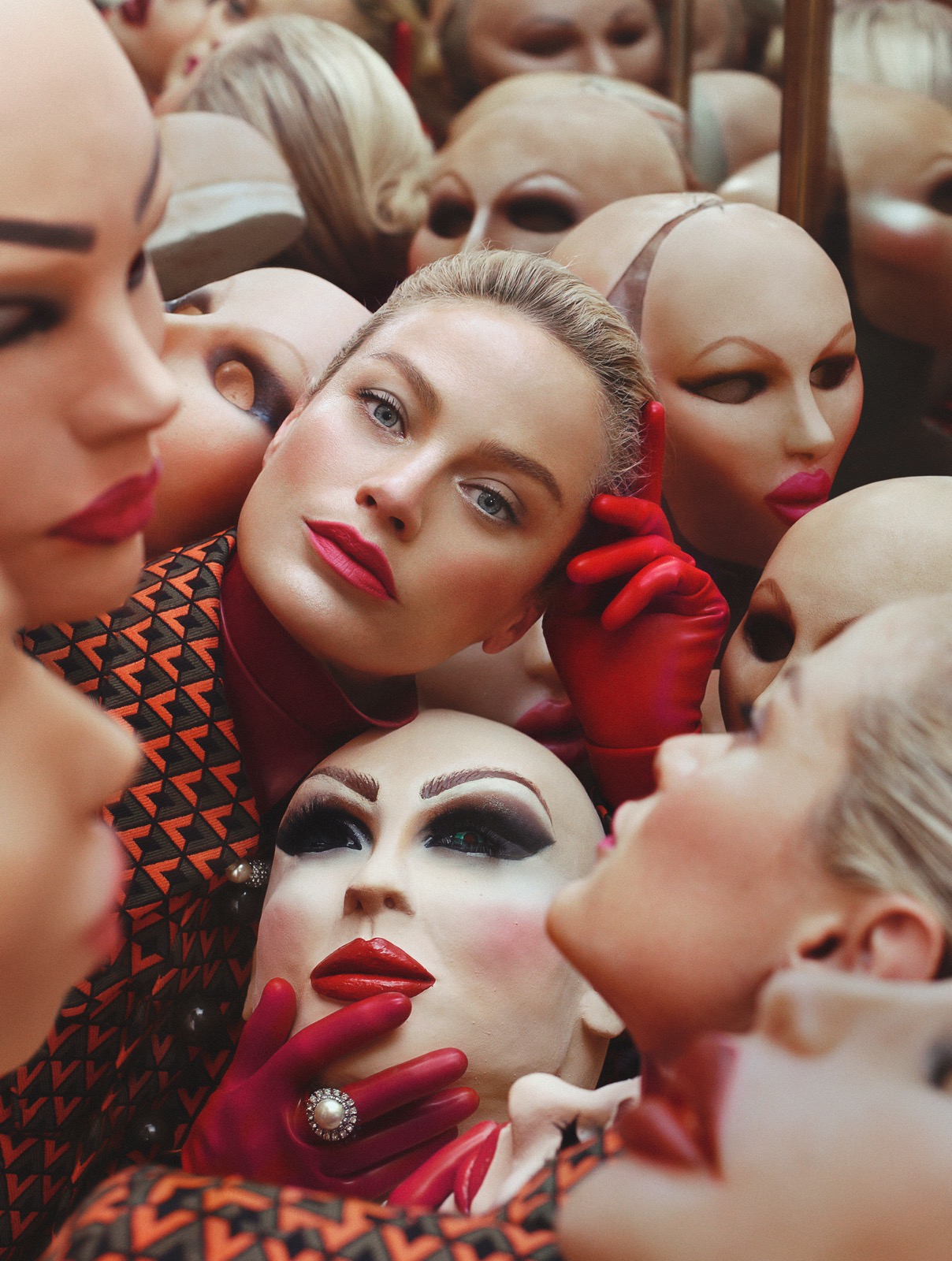
Glamour is a form of replication; the fashionable face is already a copy. Meisel's 2012 photograph makes the aphorism literal: one living woman, Carolyn Murphy, packed into a crowd of latex masks and mannequin heads, each a variation on a single idea — red mouth, arched brow, an expression of vacant availability. The frame admits no air, no setting, no world. Only faces, the commodity in its purest state.
What separates the model from her doubles is almost nothing: a certain moisture of the eye, a pore, the asymmetry of a real jaw. That almost is the entire subject. One red-gloved hand rests at her temple; the other cups the chin of a mask with the tenderness reserved for a mirror, a pearl ring worn over the glove — ornament layered on ornament, the hand never bare. The picture understands that fashion photography has never promised women beauty; it promises them seriality, the comfort and the horror of being infinitely reproducible.
It would be easy to call this satire, but satire requires distance, and Meisel works from inside the machine he describes. The horror here is affectionate; the affection, horrified. Photography once claimed to certify the real; now it certifies the perfected fake, and the one genuine face, surrounded by its progeny, looks out as if asking to be told apart. We cannot entirely oblige.