A single sheet of textured glass does all the staging. Where the Weimaraner stands behind it, the dog’s body scatters into a grey shimmer, closer to interference than to fur; where the pane stops, an eye, an ear and the tip of a nose come back into sharp focus. Out of this simplest of studio propositions Wegman builds his title’s whole plot: Psycho, the shower screen, the shape on the other side—suspense reduced to a sight gag and played absolutely straight.
The pane operates like a second lens inside the photograph, dividing one animal into two competing pictures. On one side, an abstraction any modernist would happily sign; on the other, a portrait of great tenderness. The comedy lives in the seam where they meet, timed to the millimetre, and in the dog’s professional stillness—an actor holding its mark within a scenario built precisely to its measure.
Printed in pigment at thirty by twenty-four inches, the two textures stay perfectly legible: the dissolve on one side, the wet glint of an eye on the other. It is the eye that undoes the horror-film premise, because nothing in it threatens; it simply waits, patient and faintly quizzical, for the picture to be over. The longer you look, the wider the quotation marks around the title grow, until what remains is the oldest subject in Wegman’s work—the comic seriousness of a dog doing its job.
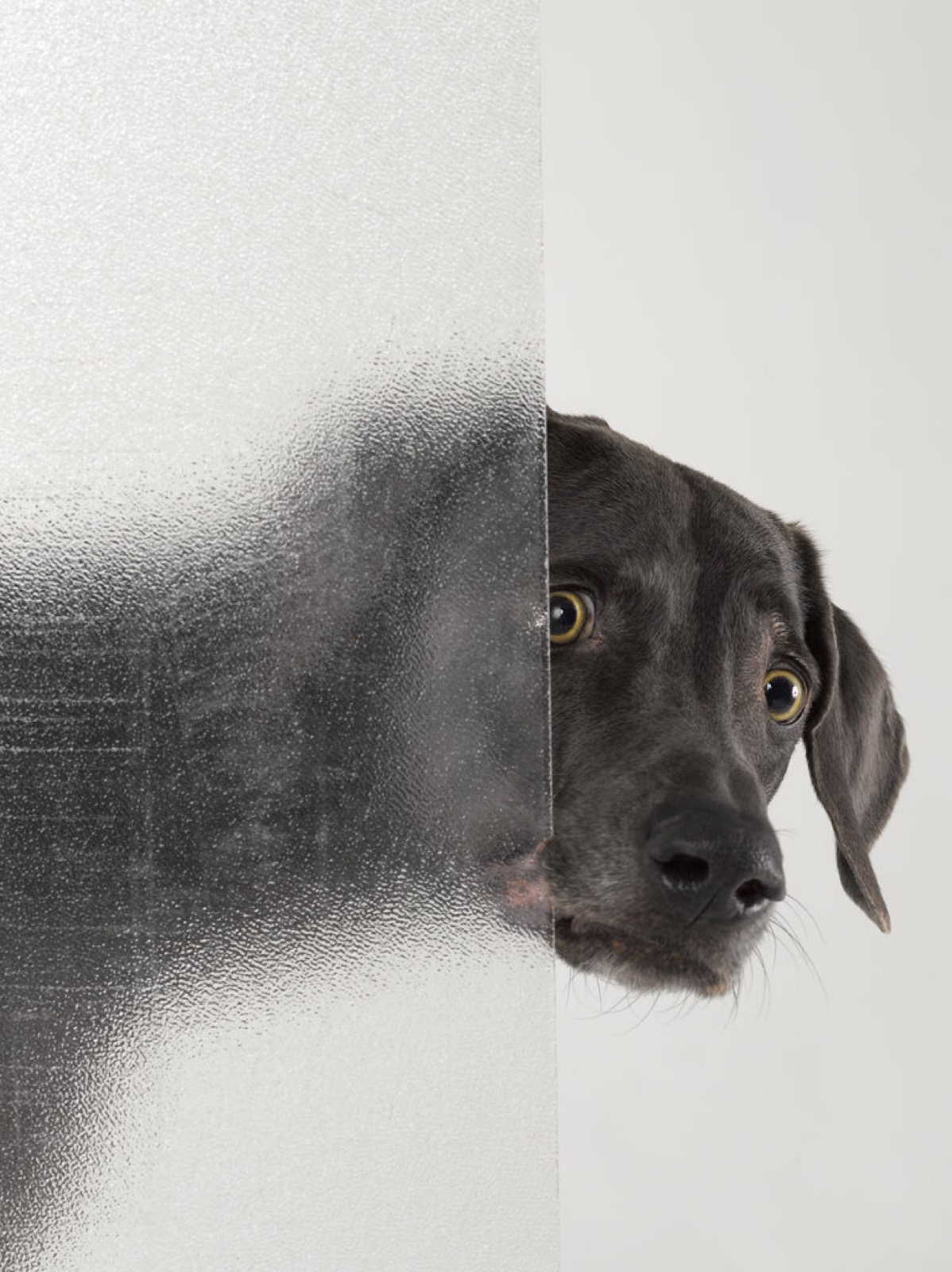
A single sheet of textured glass does all the staging. Where the Weimaraner stands behind it, the dog’s body scatters into a grey shimmer, closer to interference than to fur; where the pane stops, an eye, an ear and the tip of a nose come back into sharp focus. Out of this simplest of studio propositions Wegman builds his title’s whole plot: Psycho, the shower screen, the shape on the other side—suspense reduced to a sight gag and played absolutely straight.
The pane operates like a second lens inside the photograph, dividing one animal into two competing pictures. On one side, an abstraction any modernist would happily sign; on the other, a portrait of great tenderness. The comedy lives in the seam where they meet, timed to the millimetre, and in the dog’s professional stillness—an actor holding its mark within a scenario built precisely to its measure.
Printed in pigment at thirty by twenty-four inches, the two textures stay perfectly legible: the dissolve on one side, the wet glint of an eye on the other. It is the eye that undoes the horror-film premise, because nothing in it threatens; it simply waits, patient and faintly quizzical, for the picture to be over. The longer you look, the wider the quotation marks around the title grow, until what remains is the oldest subject in Wegman’s work—the comic seriousness of a dog doing its job.