A body turned away, folded into the seam where two walls meet, becomes almost a study in tone: the warm register of skin set against plaster that cools as it recedes into shadow. Hido photographs the back—shoulder blade, the ridge of the spine, the dark spill of hair—so that the figure reads first as terrain and only afterward as person. Nothing is offered to the camera except the fact of turning away, the head bowed toward the corner as though the wall itself were a confidant.
The archival pigment print on aluminium Dibond gives this quietness a hard, continuous skin; there is no grain to soften the passage from flesh to wall, only the slow gradient the lens has recorded, light dropping by degrees toward the crease where the planes meet. It is a picture built on withholding. We are given a back but denied a face, given intimacy but refused the exchange that would make it reciprocal.
Photography has a long argument with the nude, and Hido enters it sideways, keeping the model anonymous, domestic, unidealised, nearer to a private study than to any tradition of public display. The corner does the work a pedestal once did, but inverts its logic—no presentation, only retreat. What remains is a description of solitude rendered with the cool patience of someone more interested in how light behaves on a shoulder than in what the shoulder is meant to signify.
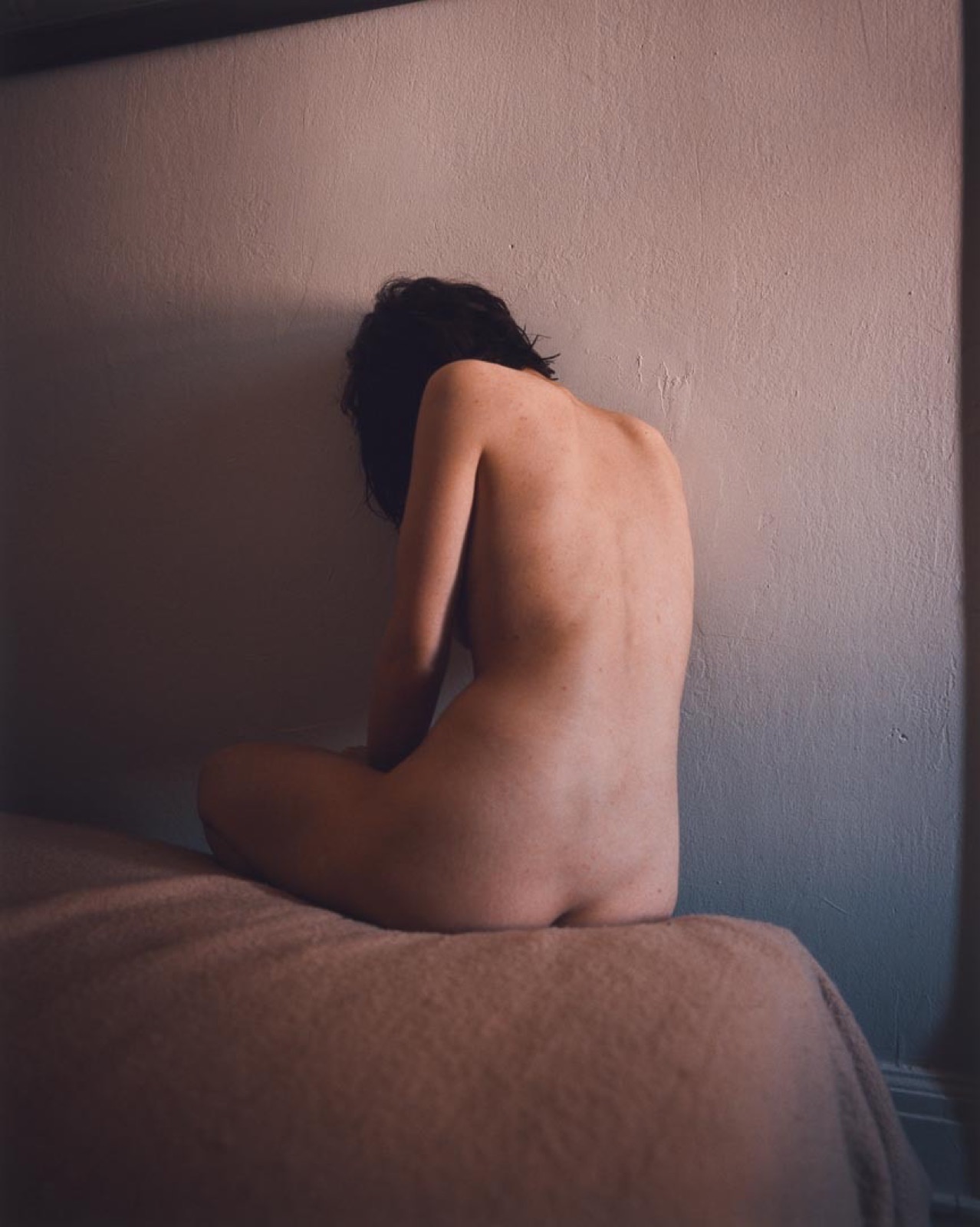

A body turned away, folded into the seam where two walls meet, becomes almost a study in tone: the warm register of skin set against plaster that cools as it recedes into shadow. Hido photographs the back—shoulder blade, the ridge of the spine, the dark spill of hair—so that the figure reads first as terrain and only afterward as person. Nothing is offered to the camera except the fact of turning away, the head bowed toward the corner as though the wall itself were a confidant.
The archival pigment print on aluminium Dibond gives this quietness a hard, continuous skin; there is no grain to soften the passage from flesh to wall, only the slow gradient the lens has recorded, light dropping by degrees toward the crease where the planes meet. It is a picture built on withholding. We are given a back but denied a face, given intimacy but refused the exchange that would make it reciprocal.
Photography has a long argument with the nude, and Hido enters it sideways, keeping the model anonymous, domestic, unidealised, nearer to a private study than to any tradition of public display. The corner does the work a pedestal once did, but inverts its logic—no presentation, only retreat. What remains is a description of solitude rendered with the cool patience of someone more interested in how light behaves on a shoulder than in what the shoulder is meant to signify.